Aftermath
O'Shaughnessy Dam
Hetch Hetchy Dam, named O'Shaughnessy Dam after its chief engineer, was completed after years of controversy, granting San Francisco Peninsula water which allowed ongoing economic development.
“In 1934, mountain water supplies first reached the San Francisco Peninsula ... representing ... San Francisco of more than $100 million … On October 17, 1989, the Loma Prieta Earthquake struck … ninety-seven percent of customers in San Francisco had no loss of water supply … The terrible cost in human life to bring a secure, high quality water supply from the Sierra to San Francisco was 89 workers ... ”
(A History of the Municipal Water Department & Hetch Hetchy System, 2005).
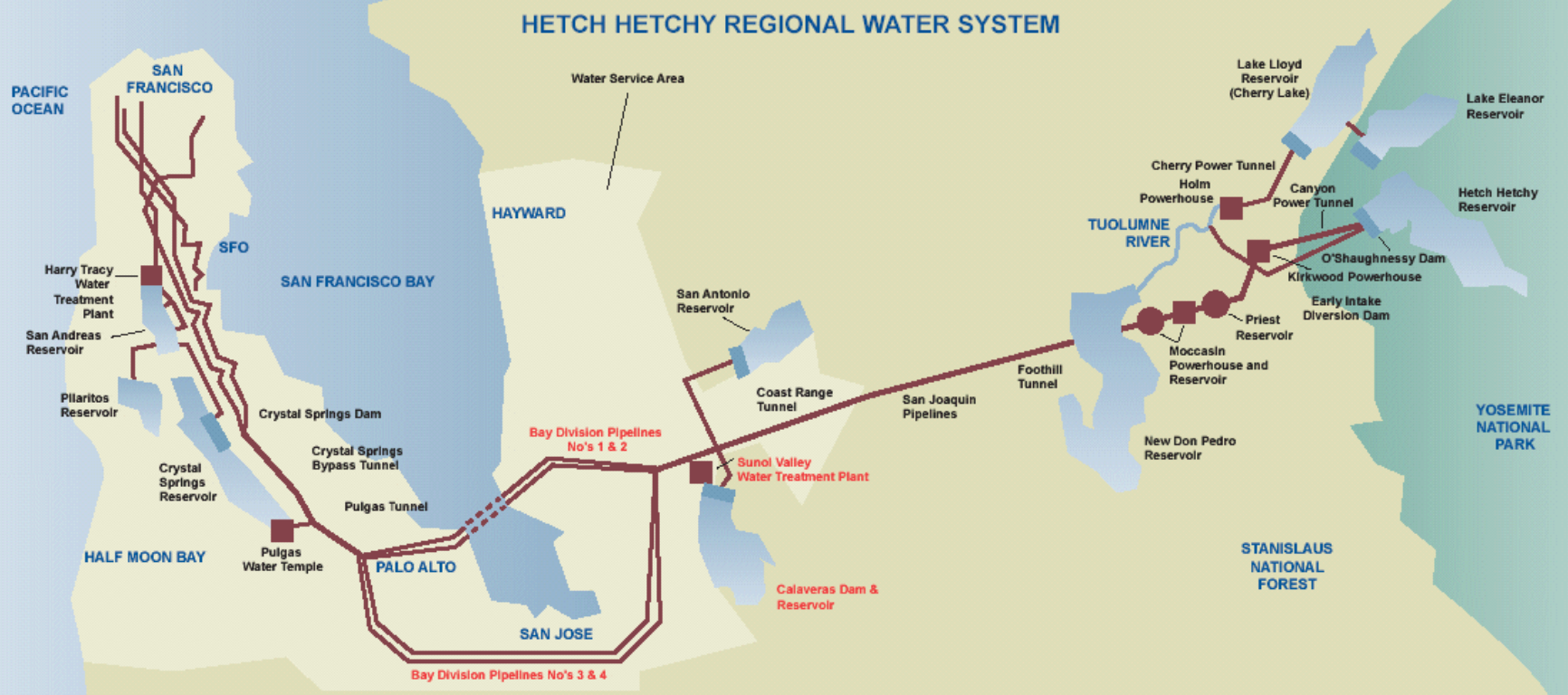
(Hetch Hetchy System, Bay Area Water Supply & Conservation)
"The regional water system provides water to 2.4 million people in San Francisco, Santa Clara, Alameda and San Mateo counties. Eighty-five percent of the water comes from Sierra Nevada snowmelt stored in the Hetch Hetchy reservoir situated on the Tuolumne River in Yosemite National Park. Hetch Hetchy water travels 160 miles via gravity from Yosemite to the San Francisco Bay Area ... Delivering approximately 260 million gallons of water per day."
(Hetch Hetchy System, Bay Area Water Supply & Conservation).
Placing the dam's highest point on the Tuolumne River secured San Francisco’s legal water rights, but they still had to share the river with other cities that already depended on it for their water supply.
"That the said grantee shall recognize the prior rights of the Modesto Irrigation District and the Turlock Irrigation District as now constituted under the laws of the State of California ... whenever the same can be beneficially used by said irrigation districts, and that the grantee shall never interfere with said rights."
(Hetch Hetchy Reservoir Site, 1913).
Demands to Undam
The dam met San Francisco’s water demands for decades with minor opposition. However, interior Secretary Hodel’s proposal to undam O'Shaughnessy reignited the controversy 50 years after the dam's completion.
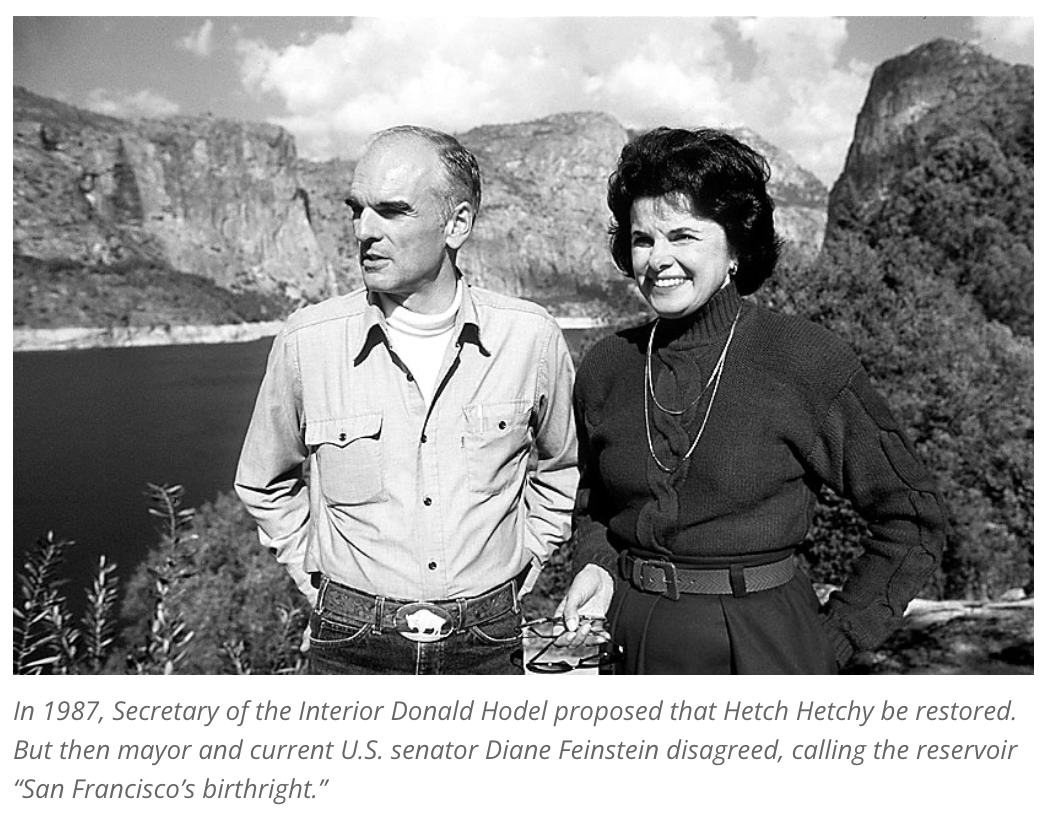
(Our Campaign)
(Hetch Hetchy: To Restore or Not, 2011)
“Hodel has said he doesn't want Hetch Hetchy, if drained, to be developed to the same level as Yosemite and he favors keeping it 'natural.' … If Hodel can garner enough support from environmentalist groups over … Hetch Hetchy, he may at the least distract conservationist attention from his Alaskan ventures.”
(Kerry Zachariasen, Hodel's motivation for his Hetch Hetchy proposal, 1987).
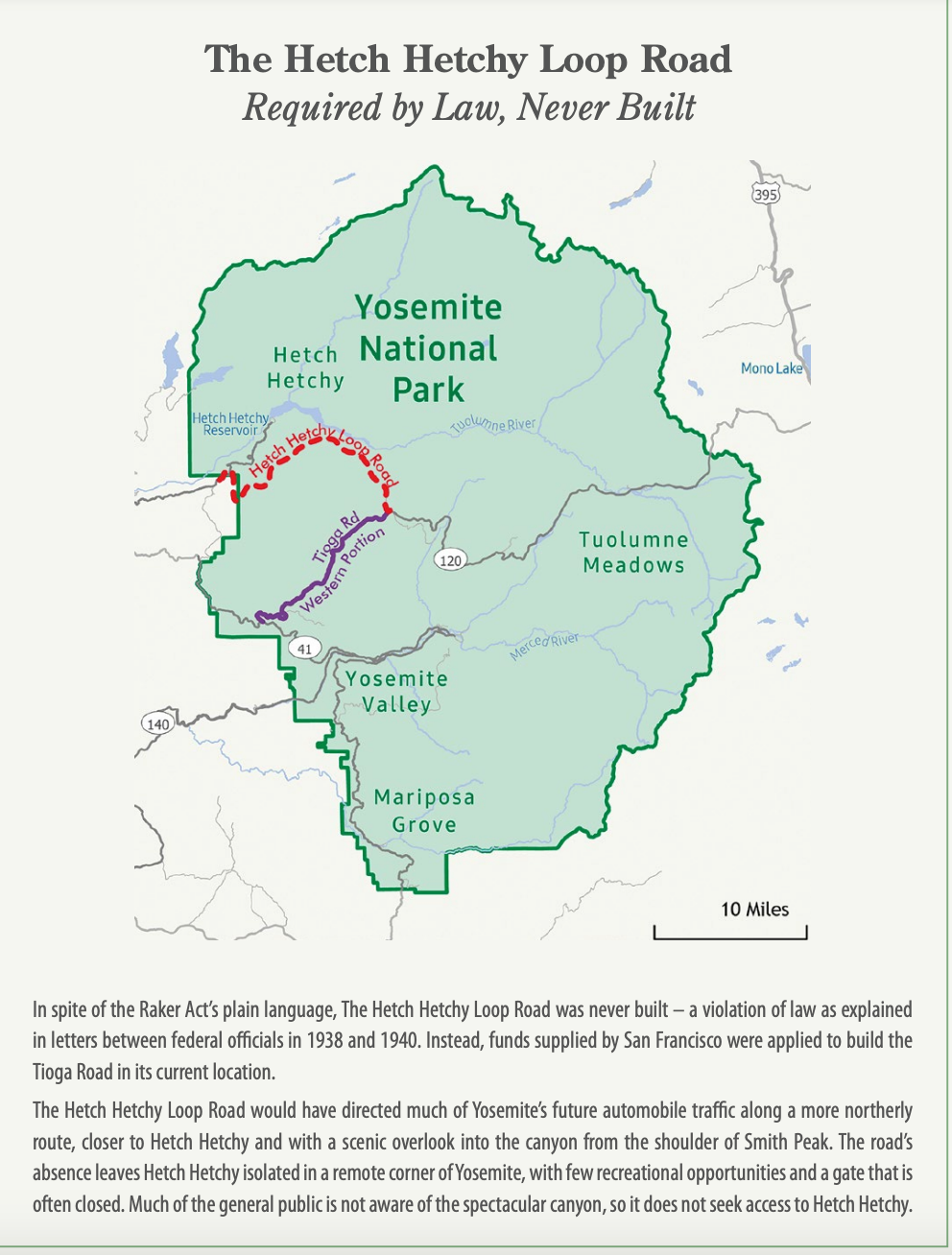
(Spreck Rosekrans and Ryan Laws, Keeping Promises, Providing Access to Hetch Hetchy Valley. Yosemite National Park, 2021)
Different groups advocated for removing O'Shaughnessy Dam, arguing that expanding Don Pedro Dam would meet San Francisco’s water needs and would improve Yosemite National Park and public access.
"San Francisco would be required to build certain roads and trails. Visitors would stay overnight, in lodges or in camps, and would be able to explore the canyon by boat.”
(Spreck Rosekrans and Ryan Laws, Keeping Promises, Providing Access to Hetch Hetchy Valley. Yosemite National Park, 2021).
"Environmental Defense and Restore Hetch Hetchy … public interest in the restoration of Hetch Hetchy Valley ... SFPUC issued four reports as a rebuttal to the report by Environmental Defense.”
(Hetch Hetchy Restoration Study, 2006).
Ongoing Environmental Responsibility
Although dams have many advantages such as flood control, water storage for drinking and irrigation, and hydropower, they also present significant issues such as high costs and displacement of people and wildlife, and they often don’t qualify as clean energy due to their high CO2 emissions from animal and plant decomposition during flooding.
“ … dams with reservoirs usually have much higher greenhouse gas (GHG) emission rates ... electricity produced from tropical reservoir-based dams could potentially have a higher emission rate than fossil-based electricity”
(Cuihong Song et al., Cradle-to-grave greenhouse gas emissions from dams in the United States of America, 2018).
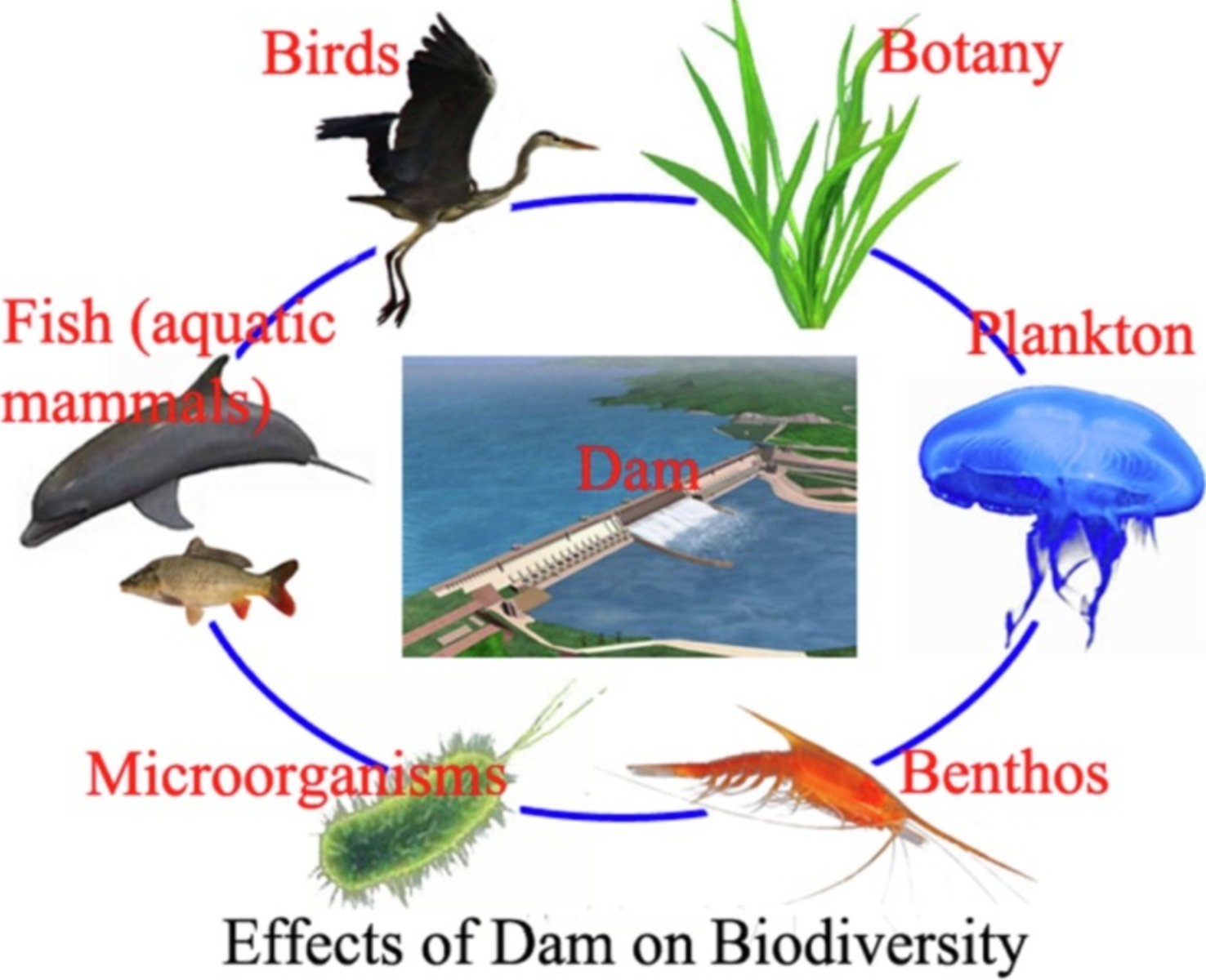
(Haipeng Wu et al., Effects of Dam Construction on Biodiversity: A Review, 2019)
Dams also increase environmental responsibility by degrading water quality, altering water temperature, creating sediment buildup, and disrupting ecosystems.
“Dam construction has altered wetland ecosystems … induces changes in river flow regimes, sediment regimes and wetland morphology and geomorphology … Wetlands … provide habitats for biology on the earth and play an important role in biodiversity protection … they are damaged by dam construction …”
(Haipeng Wu et al., Effects of dam construction on biodiversity: A review, 2019)
Many dams along the Tuolumne River damage biodiversity. Clean water and other human rights matter but depend on healthy ecosystems because everything in nature is connected. Finding balance between humanity’s rights and responsibilities to protect nature is essential for the survival of future generations.
“ ... damming and redirecting the flow of many Sierra Nevada and Coast Range rivers—damaging the ecosystems of native fish and amphibians.”
(Ellen Hanak et. al, Managing California’s Water From Conflict to Reconciliation, 2011).
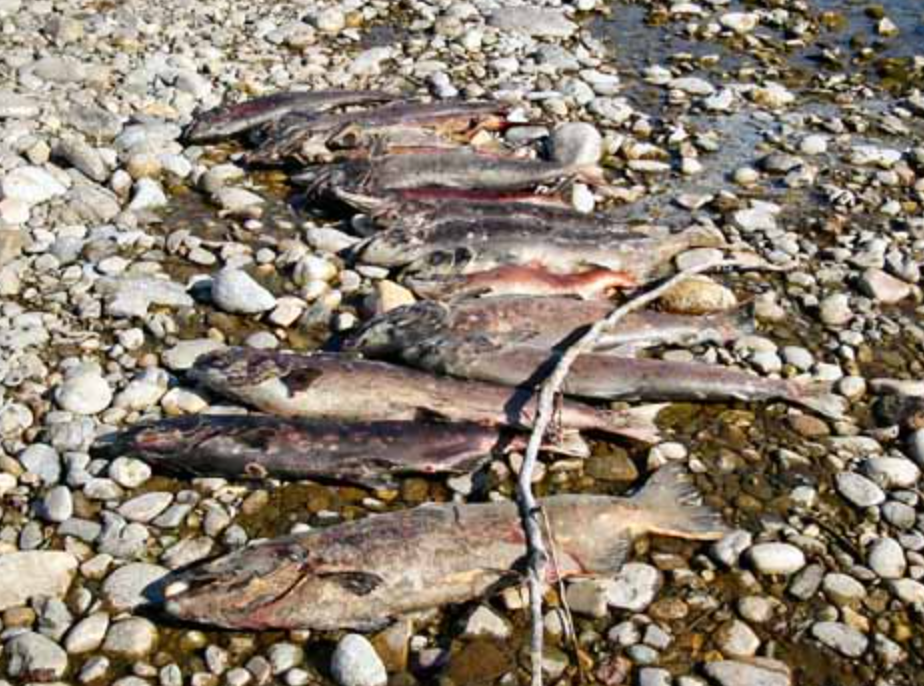
(Craig A. Will, COLLAPSE! Why do the Salmon Continue to Disappear from Our Mother Lode Rivers?, 2010)
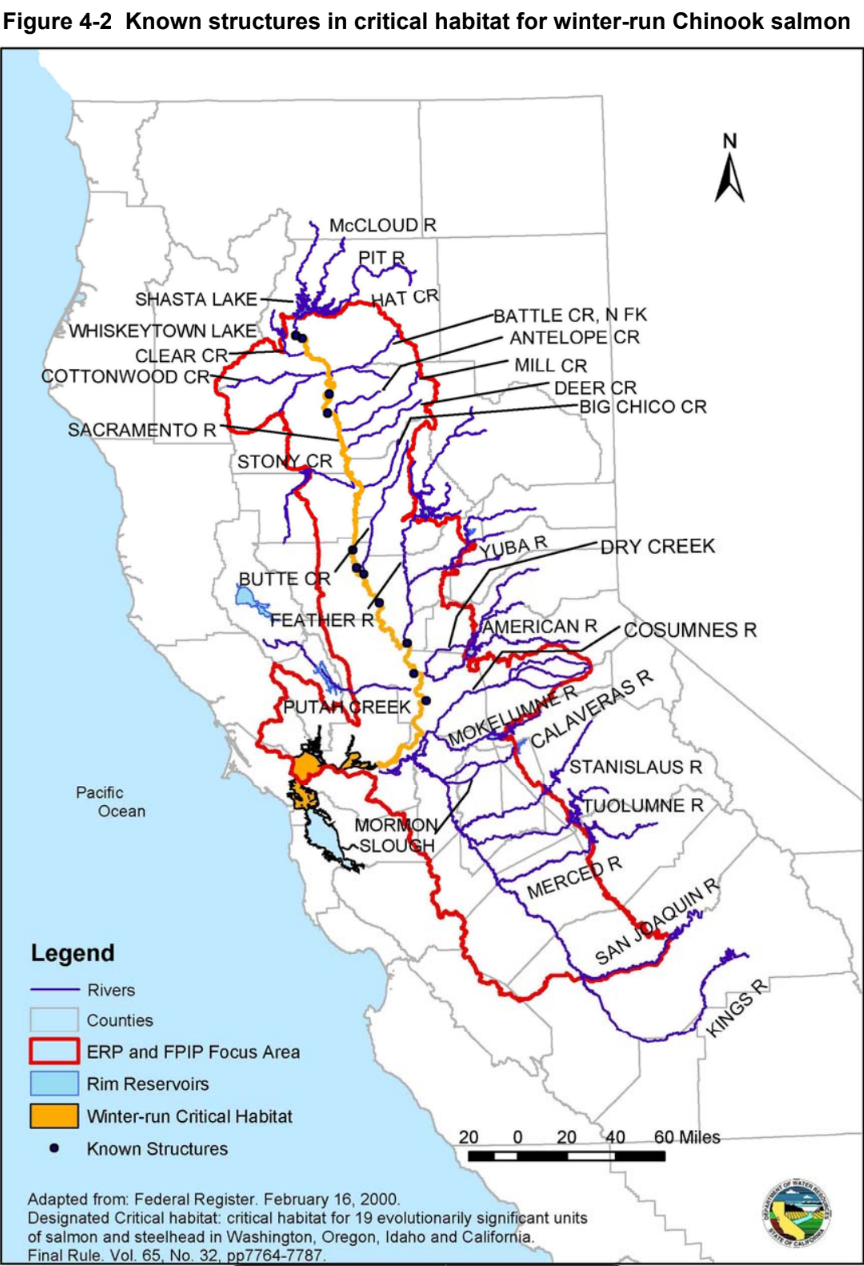
(Fish Passage Improvement: An Element of CALFED’s
Ecosystem Restoration Program, 2005)
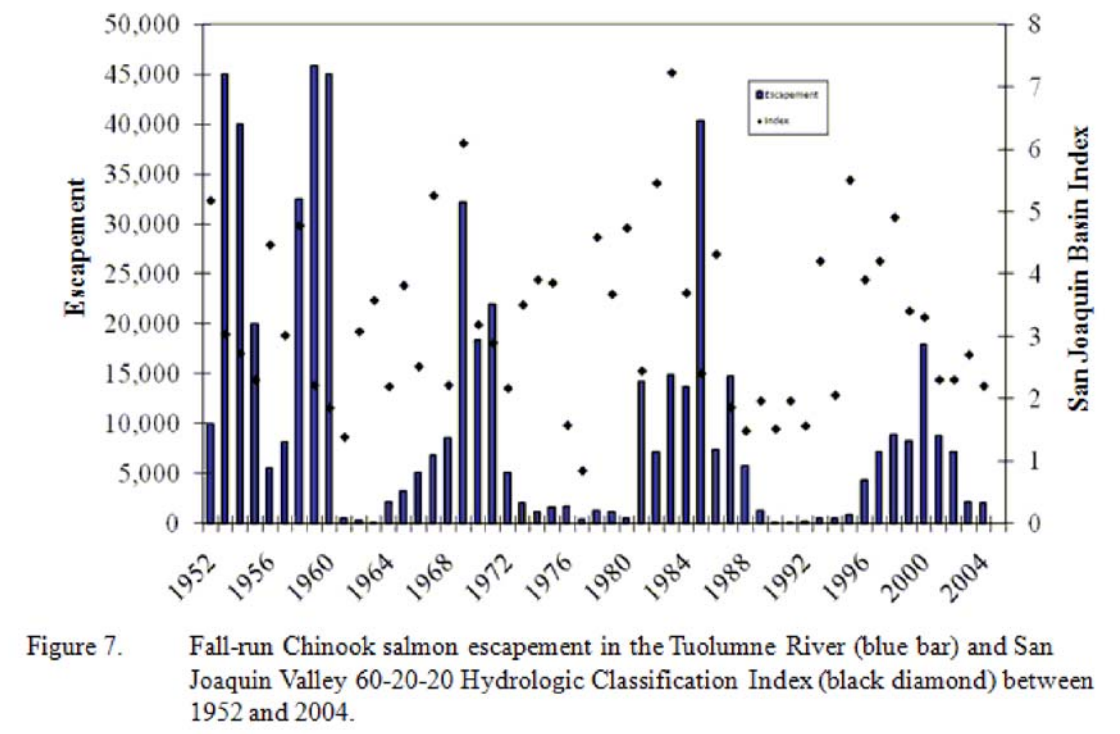
(Jeffrey Mclain, Managing the Tuolumne River for Salmonids: Assessment of the 1995 Settlement Agreement, 2010)
“The Tuolumne River has not hosted spring-run Chinook salmon since at least 1959, due to low flows and high water temperatures in the summer.”
(Fish Passage Improvement: An Element of CALFED’s Ecosystem Restoration Program, 2005).
“Twenty-four percent of the native fish in the Sierra Nevada are listed as threatened or endangered ... 26% ... in danger of extinction in the near future, and another 26% were vulnerable to extinction if present declining trends continue, 26% were in decline, and only 17% were found to be relatively stable.”
(Susan Britting et al., National Forests in the Sierra Nevada: A Conservation Strategy, 2012).