Revolution

The Uprising

 In reaction to the increase in work quotas, high prices, and poor living standards, East German workers went on strike on June 16-17, 1953, protesting against the government.

“On June 16, workers at several Berlin construction sites walked off the job, demanding a reinstatement of the old norms.”

(Kopstein, Chipping Away at the State: Workers' Resistance and the Demise of East Germany)

Naumov, a correspondant for Pravda (a Soviet newspaper), saw a poster with the writing 'We demand the reduction of norms!'"

(Naumov, Report on the Events in Berlin on 16 and 17 June 1953)

"The procession lasted until about 6 p.m. The demonstrators...called out...for Berliners to join in a general strike at 7 a.m. on 17 June."

(Naumov, Report on the Events in Berlin on 16 and 17 June 1953)
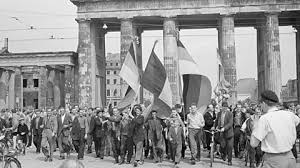
(BBC- In June 1953 East German workers went on strike in protest at Soviet rule)

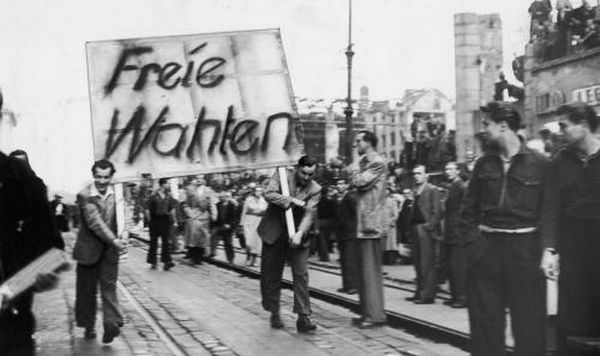
Slogans Naumov heard on June 16 include: “We demand a raise in living standards!” “We demand a reduction of norms!” “We are workers, not slaves!” “We want to be free men!” “We demand free elections!”

(Naumov, Report on the Events in Berlin on 16 and 17 June 1953)
“RIAS [Radio in the American Sector] intermittently broadcast…that the general strike in East Berlin was planned for the 17 June…RIAS broadcast the…West Berlin city legislature. All speakers quite frankly supported the striking workers and promised aid”

(Naumov, Report on the Events in Berlin on 16 and 17 June 1953)
On June 17, about 500,000 workers went on strike and about 400,000 more people in the GDR protested, in 272 different towns or cities throughout the country.

(Kopstein, Chipping Away at the State: Workers' Resistance and the Demise of East Germany)

On “Stalinallee at 7:30 a.m., we saw already the first column of demonstrators, some 7,000 to 10,000 people" (Stalinalle has since been renamed to Karl-Marx-Allee)

(Naumov, Report on the Events in Berlin on 16 and 17 June 1953)
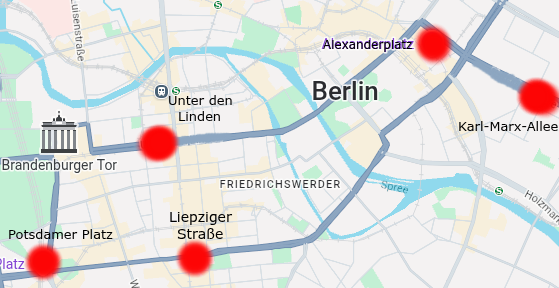
Map of Berlin from Google Maps, edited by student

Note that the largest protests were near the Liepziger Straße and Potsdamer Platz Also note that Karl-Marx-Allee was known as Stalinalle at the time
“At 9 am, the first large (30k people) column of protesters arrived at Unter den Linden” Naumov also notes that protests were concentrated in Potsdamer Platz, Alexanderplatz, and Liepziger Straße.

(Naumov, Report on the Events in Berlin on 16 and 17 June 1953)
The uprising began to shift into a revolution against the government that threatened to topple the SED.
"Alongside the slogans from the previous day, new ones appeared: 'Down with the Grotewohl government!', 'Down with the SED regime!'"

(Naumov, Report on the Events in Berlin on 16 and 17 June 1953)

"provocateurs from West Berlin were easily recognizable by their appearance and behavior"

(Naumov, Report on the Events in Berlin on 16 and 17 June 1953)

While there were protesters from West Berlin, Naumov dubbing them provocateurs is not justified, as the uprising was decentralized and driven by workers

(Kopstein, Chipping Away at the State: Workers' Resistance and the Demise of East Germany, Ostermann, Uprising in East Germany 1953)

(Military Histories- Demonstrators demand free elections). Freie Wahlen translates to Free Elections.


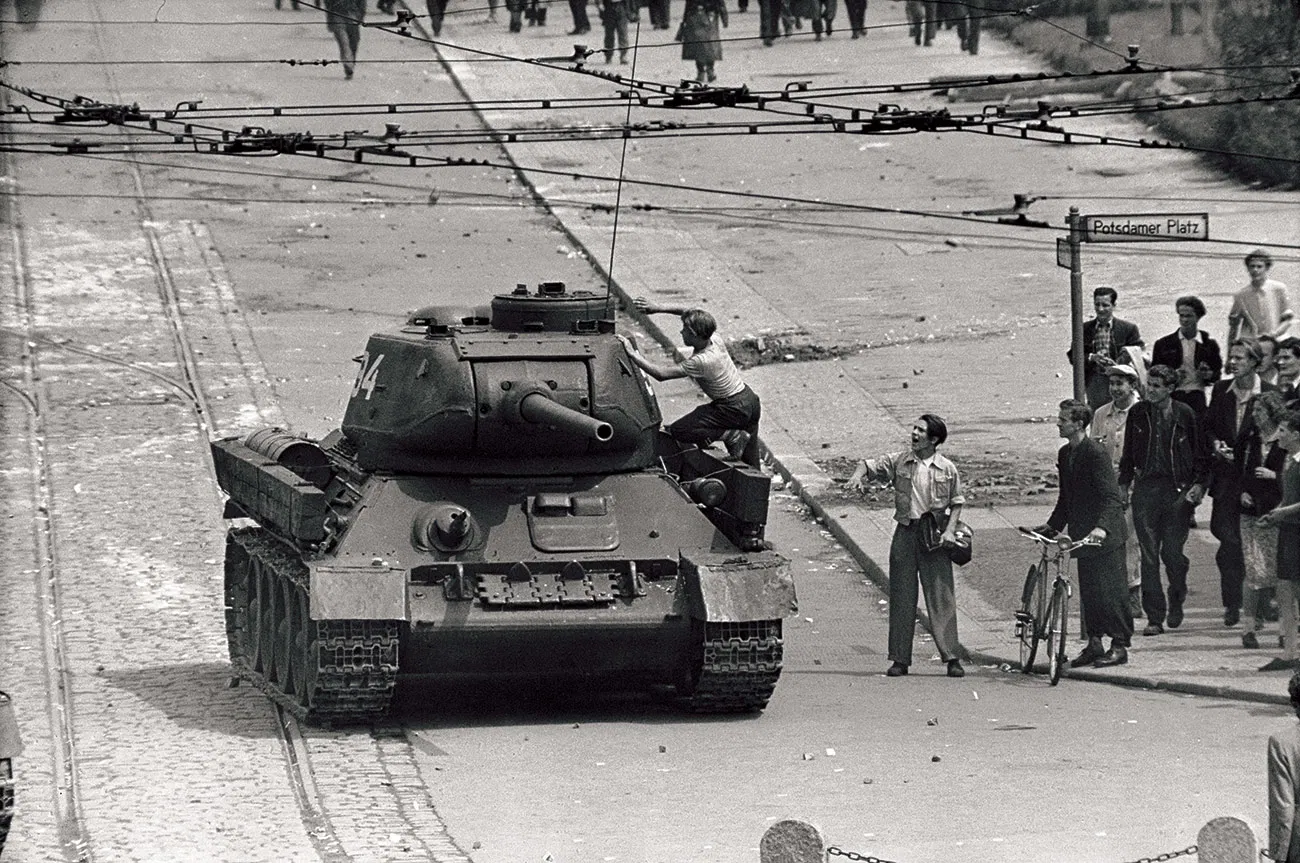
"Soviet troops appeared...in the early morning...they drove around without impeding...the columns...demonstrators fell upon the cars of Soviet soldiers, even upon tanks. Sometimes they threw stones"

(Naumov, Report on the Events in Berlin on 16 and 17 June 1953)

(Wikipedia- Clashes between the demonstrators, Soviet troops, and German police units continued for several days in East Germany)

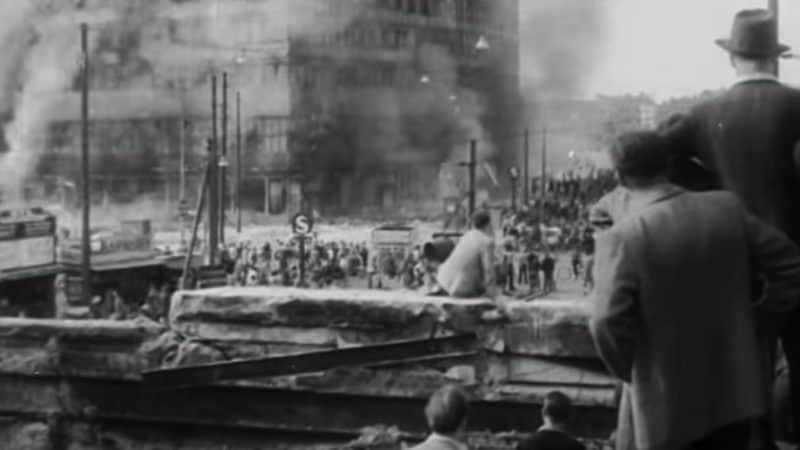
"a fight broke out between a cordon of People's Police officers, who were guarding the House of the GDR Ministries on Leipziger Strasse, and the putschists [protesters]"

(Naumov, Report on the Events in Berlin on 16 and 17 June 1953)

"On the first floor of Police headquarters, not one window remained intact. In front of this very building, three police cruisers were incinerated. The People's Police did not shoot."

(Naumov, Report on the Events in Berlin on 16 and 17 June 1953)

"When martial law was declared in the Soviet sector, the demonstrators began slowly to draw back."

(Naumov, Report on the Events in Berlin on 16 and 17 June 1953)

“most workers quickly returned to work after the regime guaranteed that output norms would be restored to their previous level…the backbone of the strike movement had been broken by regime concessions well before the Soviets marched in”

(Kopstein, Chipping Away at the State: Workers' Resistance and the Demise of East Germany)

Estimates on the number of protesters vary:

"Approximately 66 thousand people, including some 10 thousand West Berliners, took part in the street demonstrations in East Berlin”

(Sokolovskii et al., On the Events of 17-19 June 1953 in Berlin and the GDR and Certain Conclusions from these Events)

"According to my careful estimates, some 100,000 people actively took part in the demonstrations on 17 June"

(Naumov, Report on the Events in Berlin on 16 and 17 June 1953)

(History Today- East Germans confront Soviet tanks on Potsdamer Platz, 17 June 1953)

Naumov concluded, from what he saw that "this operation was carefully and well planned in advance"

(Naumov, Report on the Events in Berlin on 16 and 17 June 1953)

Kopstein and Ostermann agree that the protests were spontaneous, likely the advantage of viewing these events in hindsight.

(Kopstein, Chipping Away at the State: Workers' Resistance and the Demise of East Germany and Ostermann, Uprising in East Germany 1953)

Previous
Next