
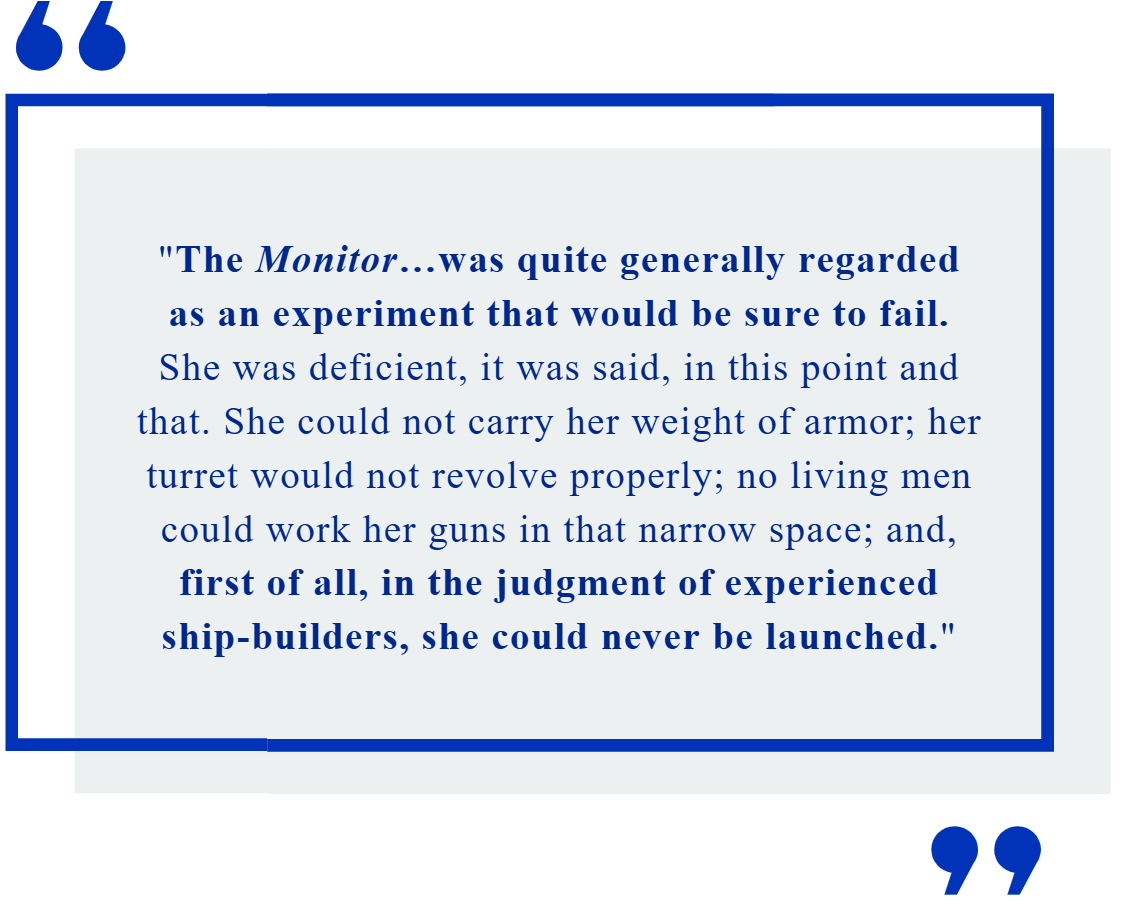
"Iron Armor for Ships," Cincinnati Daily Commercial,
February 14, 1862.


Clary Ray, "United States Steamer Monitor," ca. 1900. U.S. Naval History and Heritage Command.
By proving the strength of ironclads, the Monitor caused immediate, revolutionary changes in how people approached naval warfare.
Before the battle, many had been skeptical. Some predicted ironclads would sink immediately.
"Iron Armor for Ships," Cincinnati Daily Commercial,
February 14, 1862.
"Iron-Clad Vessels." Harper's New Monthly Magazine,
September 1862.
"Before we left Brooklyn we heard every kind of derisive epithet applied to our vessel. She was called a “silly experiment,” an “iron coffin for her crew” & we were styled fool hardy for daring to make the trip in her, & this too by naval men."
Letter from William F. Keeler, paymaster on the Monitor, to his wife, Anna Keeler, March 6, 1862, in Ink, Dirt, and Powder Smoke, edited by Charles W. McLandress.
After the battle, people realized how powerful ironclads were.
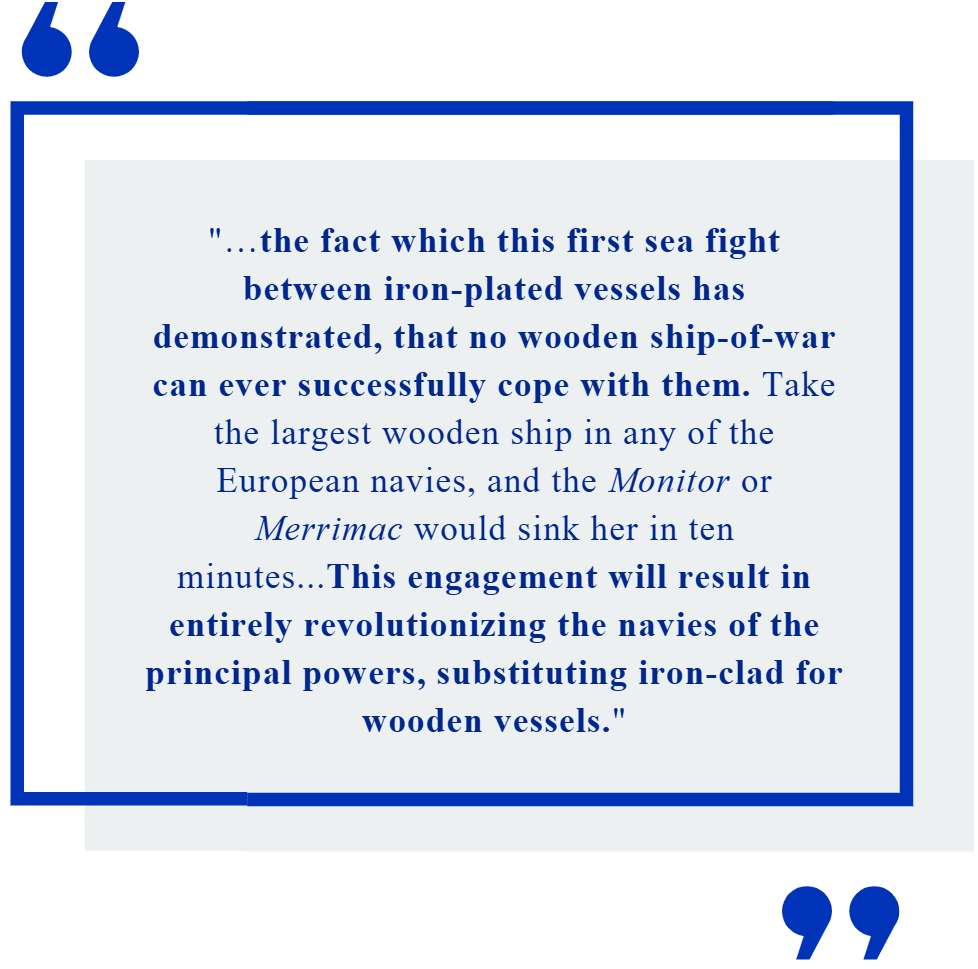
"The Exciting from Fortress Monroe—Operations of the Union Iron-Clad Streamers," The New York Herald, March 10, 1862.
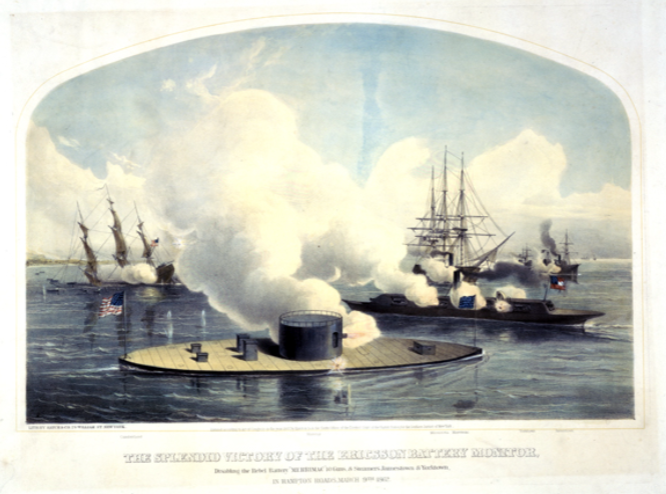
Hatch & Co, "The Splendid Victory of the Ericsson Battery Monitor," 1862. The Mariner's Museum and Park.
"...the great success of the [Monitor]…shows the great value of this class of vessels and their superiority over the old wooden war ships, both steam and sailing…it is to be hoped that the Naval Committee of the Senate will at once reconsider their action in regard to the appropriation of fifteen millions of dollars for additional iron gunboats for our navy. Their value is so strikingly manifest at this time that there should be no delay in adding as many more of them as possible to the naval arm of our service."
"Notes of the Week." Pacific Commercial Advertiser (Honolulu, HI), May 1, 1862.
In the North, the Monitor was celebrated as the Union’s savior and the future of naval warfare.

"America," The Evening Herald (London), March 27, 1862.
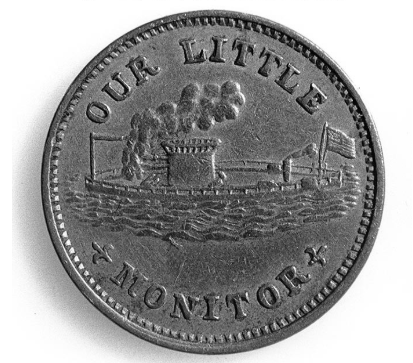
"Our Little Monitor," 1863. U.S. Naval History and Heritage Command.
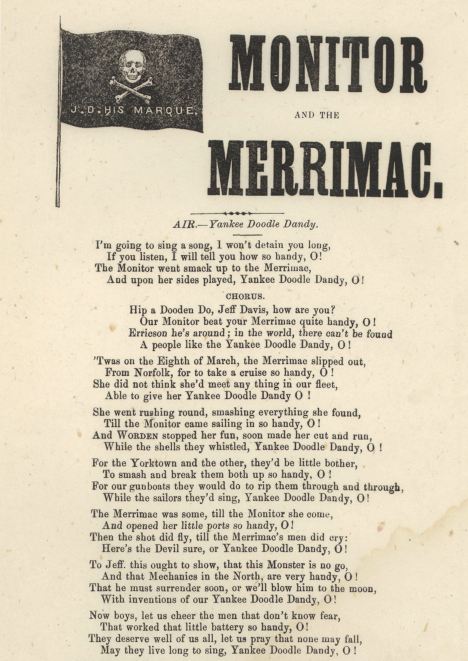
Chas A. Clark, "Monitor and the Merrimac. Air.--Yankee Doodle Dandy," 1862. American Broadsides and Ephemera.

Letter from William F. Keeler, paymaster on the USS Monitor, to his
wife, Anna Keeler, March 11, 1862, in Ink, Dirt, and Powder Smoke,
edited by Charles W. McLandress.
People created songs, poems, and other celebratory memorabilia.
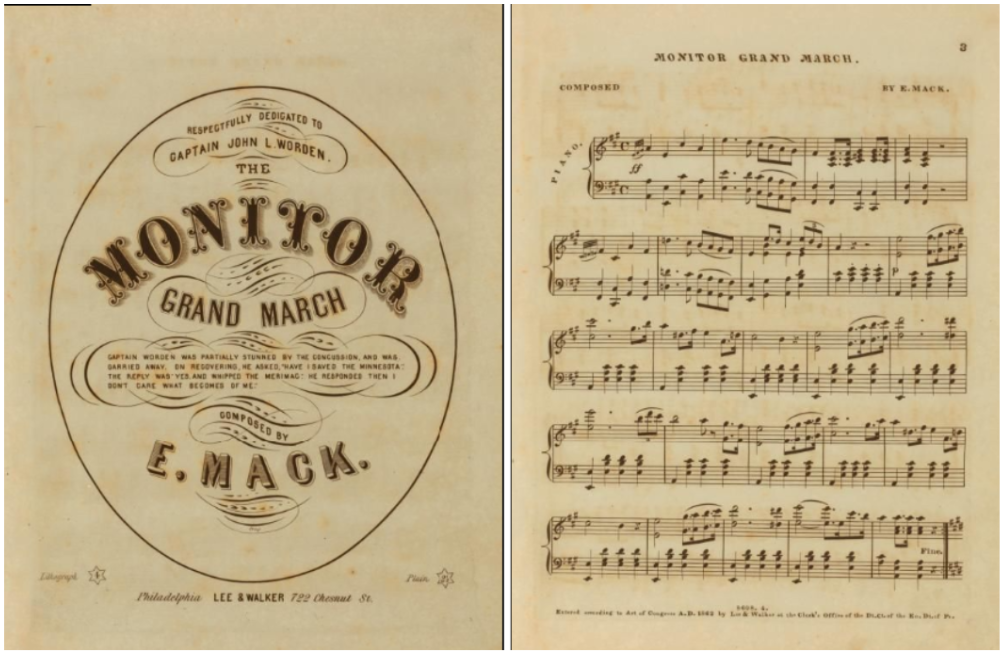
E. Mack, "The Monitor Grand March," 1862. New York Public Library Digital Collections.
John R. Allen, "Monitor Grand March (1862)," August 20, 2023.
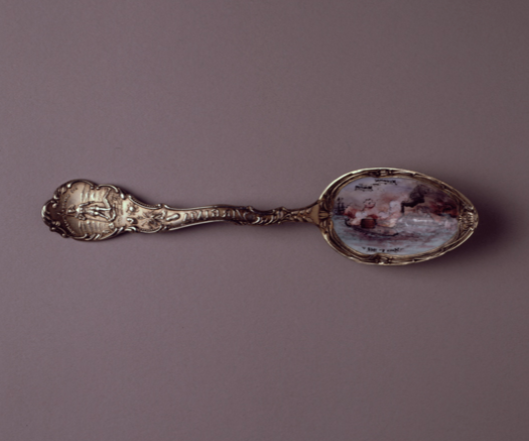
Paul Gale Greenwood Company, "Monitor and Merrimac Souvenir Spoon," n.d. The Mariner's Museum and Park.
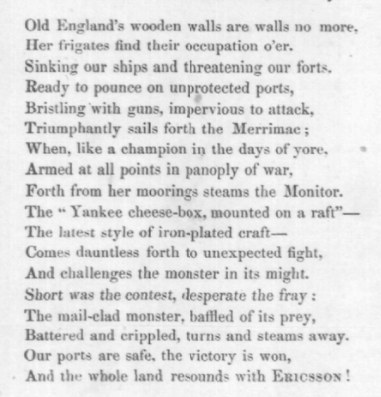
"New Year's Address of the Carriers of the Providence Journal. January 1, 1863," 1862. American Broadsides and Ephemera.
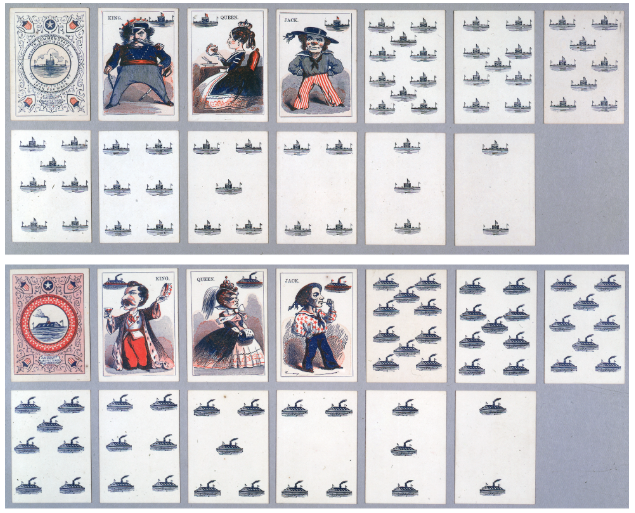
A. Dougherty, "Battle of Hampton Roads Playing Cards," ca. 1862-1874. The Mariner's Museum and Park.
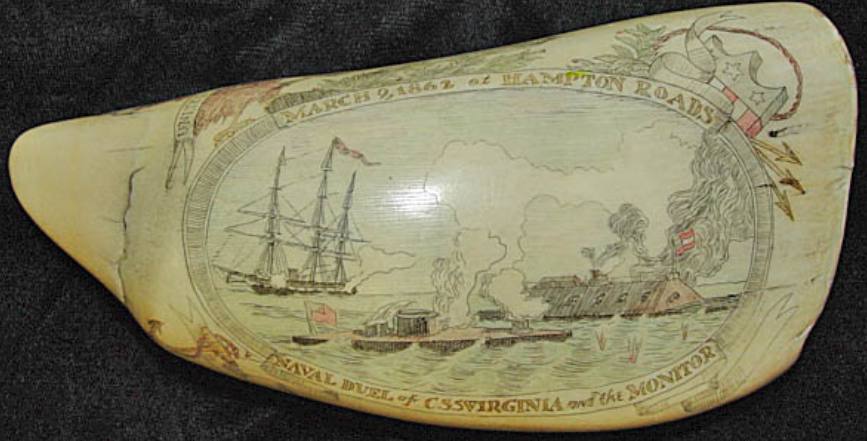
"Naval Duel of CSS Virginia and the Monitor," ca. 1862-1865. The Mariner's Museum and Park.
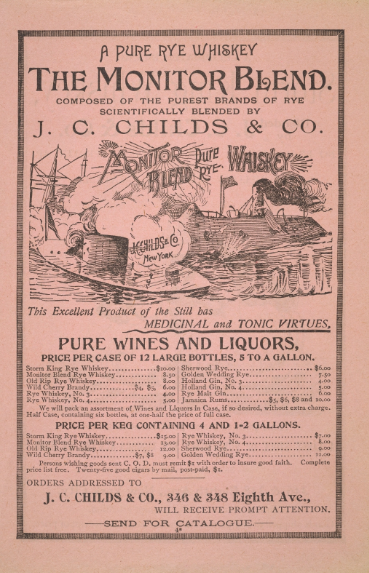
"'The Monitor Blend' Pure Rye Whiskey,"
ca. 1885-1902. The Mariner's Museum and Park.
The Union immediately commissioned more ironclads based on the Monitor’s design. These became a new type of ship called ‘monitors.’
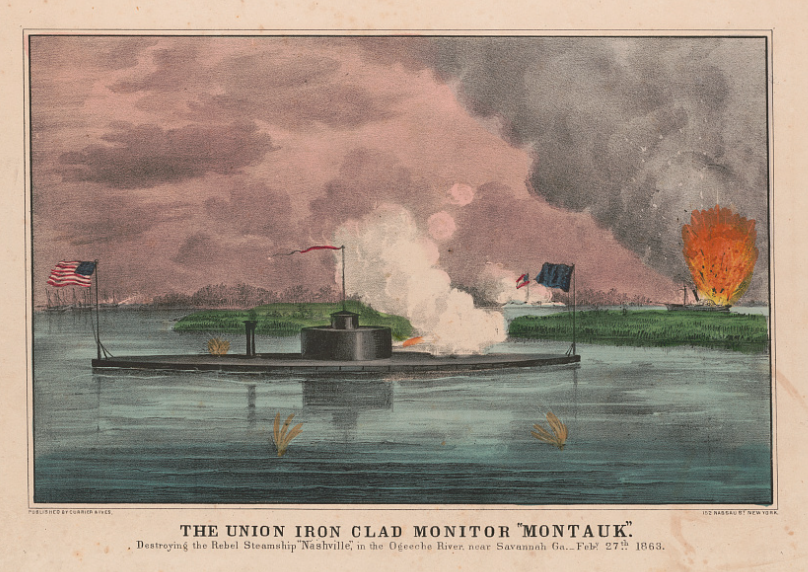
Currier & Ives, "The Union Iron Clad Monitor 'Montauk,'" 1863. Library of Congress.
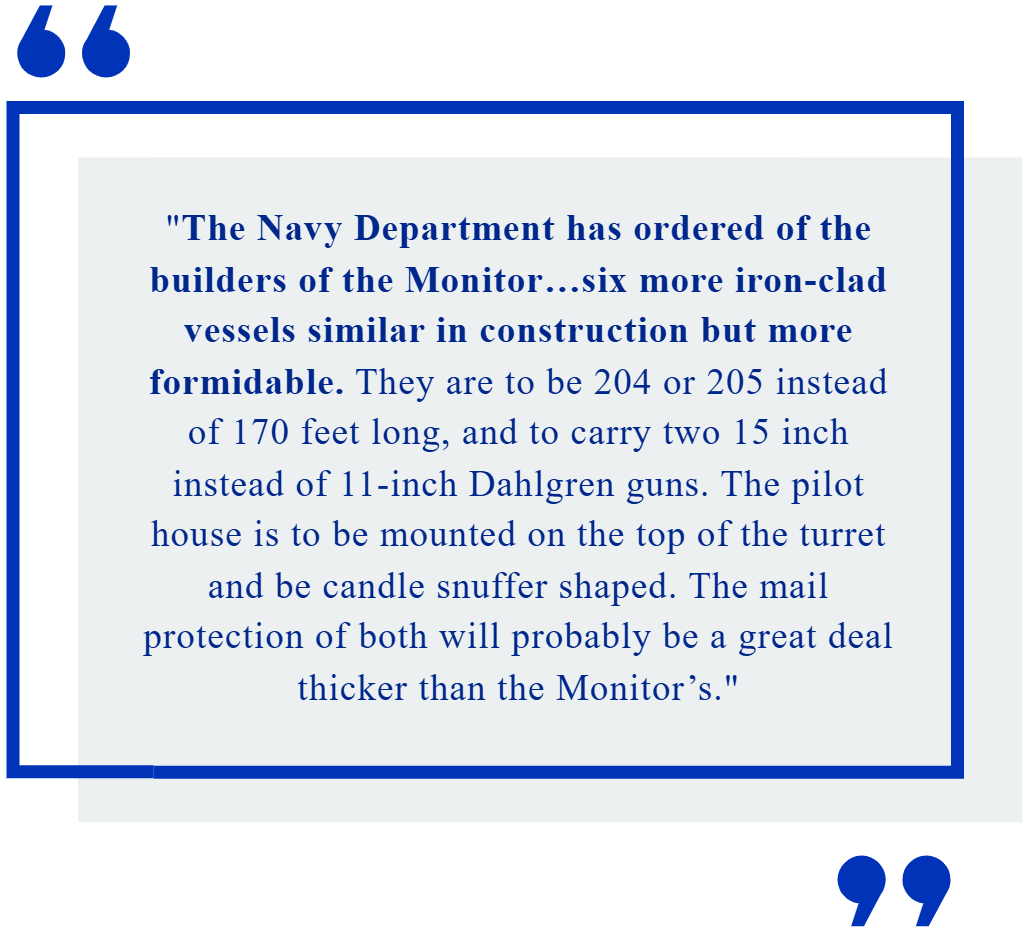
"More Iron-Clad Vessels," Daily State Sentinal (Indianapolis, IN). March 24, 1862.
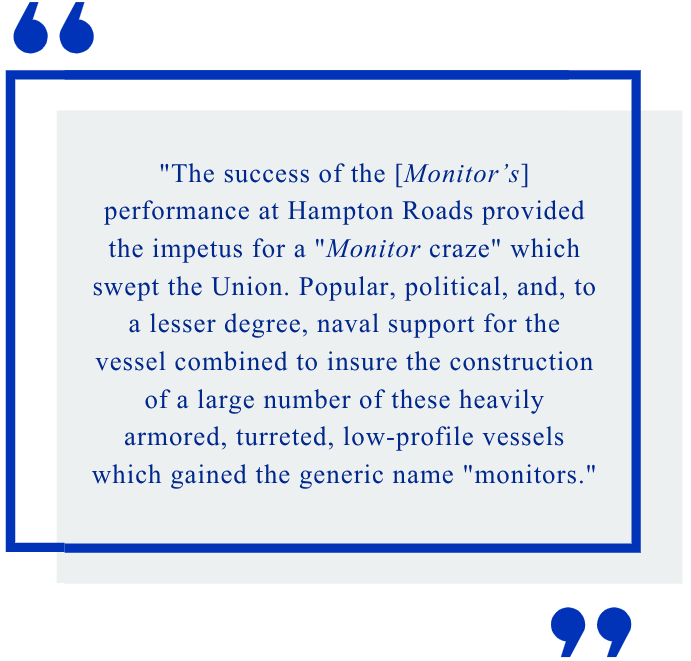
James P. Delgado, “‘A Symbol of American Ingenuity:’ Assessing the Significance of U.S.S. Monitor,” 1988.
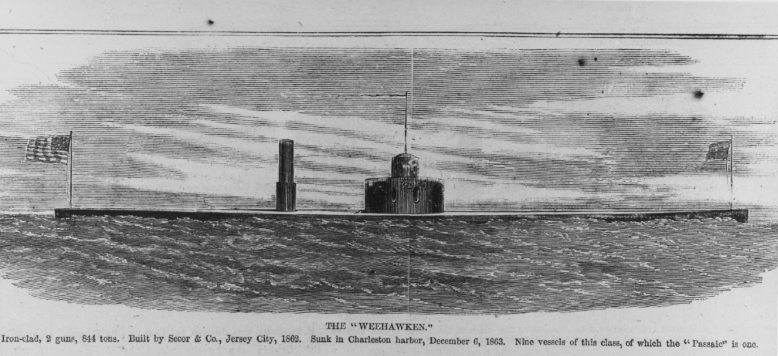
"The 'Weehawken,'" 1866. U.S. Naval History and Heritage Command.
Internationally, the Monitor was widely discussed. Countries immediately recognized the power of ironclads and reevaluated the strength of their navies.
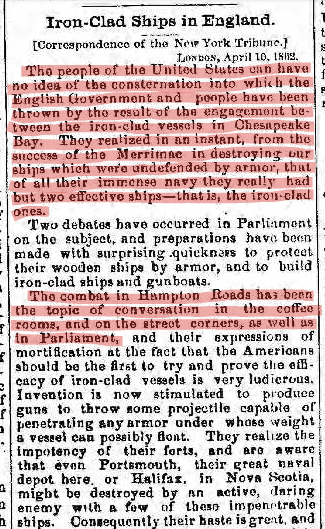
"Iron-Clad Ships in England," Whitewater Register (Whitewater, WI), May 2, 1862.

"Iron-Clad Ships in England," Whitewater Register (Whitewater, WI),
May 2, 1862.
"Foreign and Colonial," The Guardian (London), April 9, 1862.
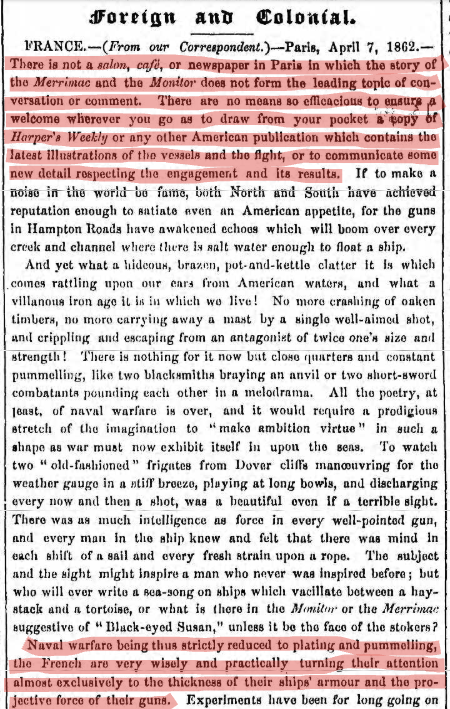
"Foreign and Colonial," The Guardian (London), April 9, 1862.
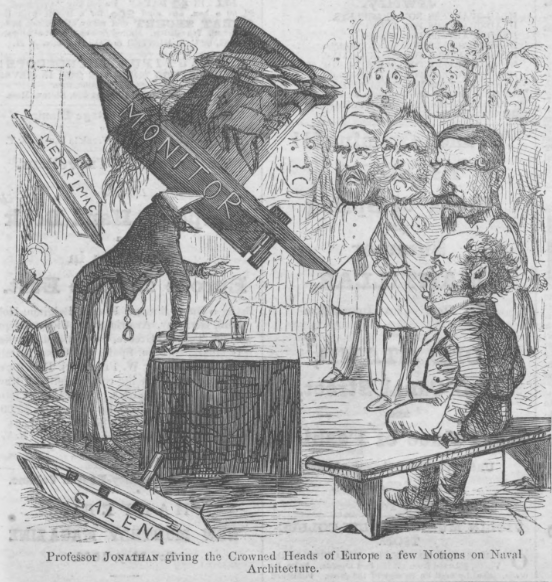
"Professor Jonathan Giving the Crowned Heads of Europe a Few Notions on Naval Architecture," Harper's Weekly, March 10, 1862.
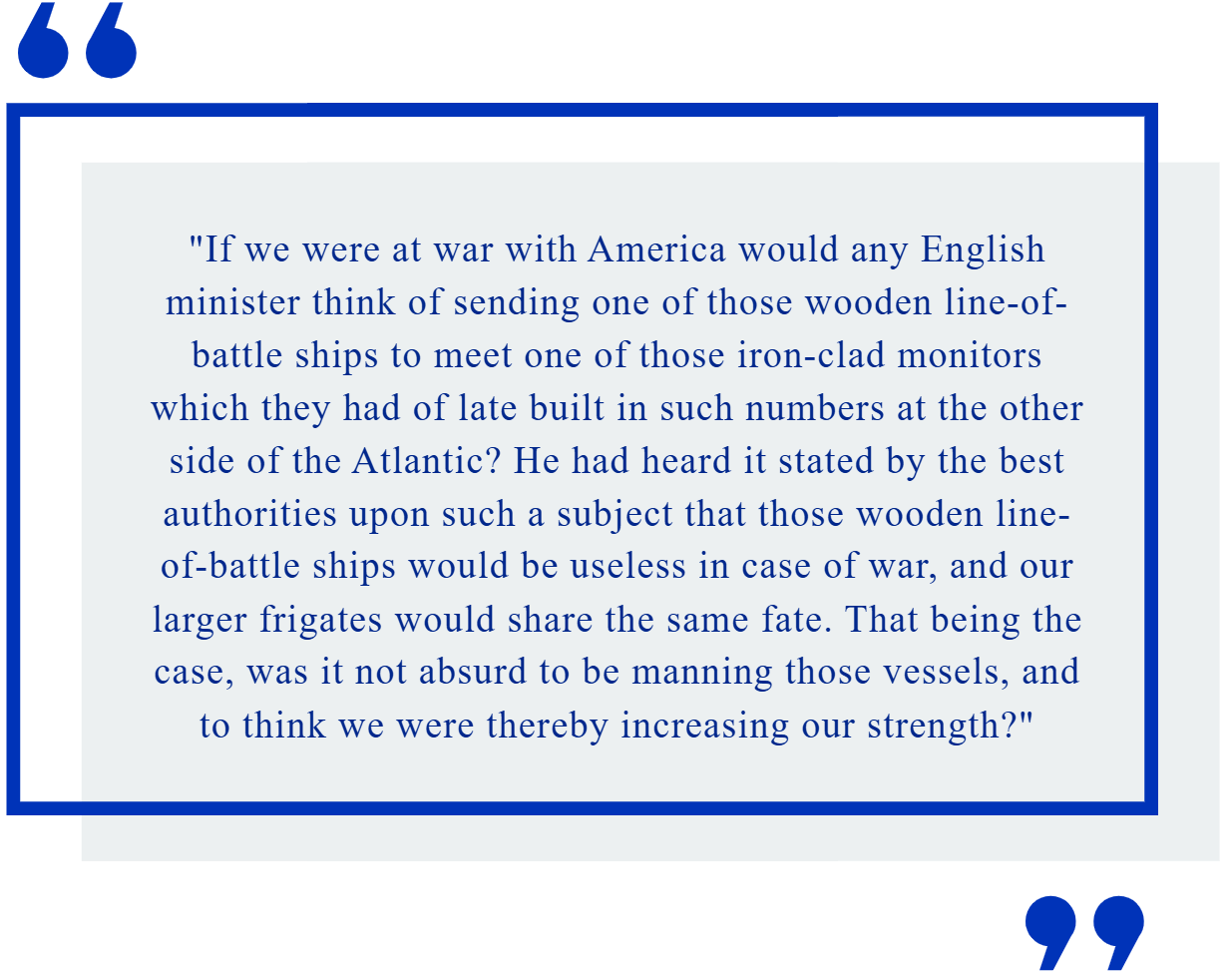
"Imperial Parliament," The Evening Herald (London), February 27, 1863.
In one battle, the Monitor had made wooden warships obsolete.