James P. Delgado, “‘A Symbol of American Ingenuity:’
Assessing the Significance of U.S.S. Monitor,” 1988.
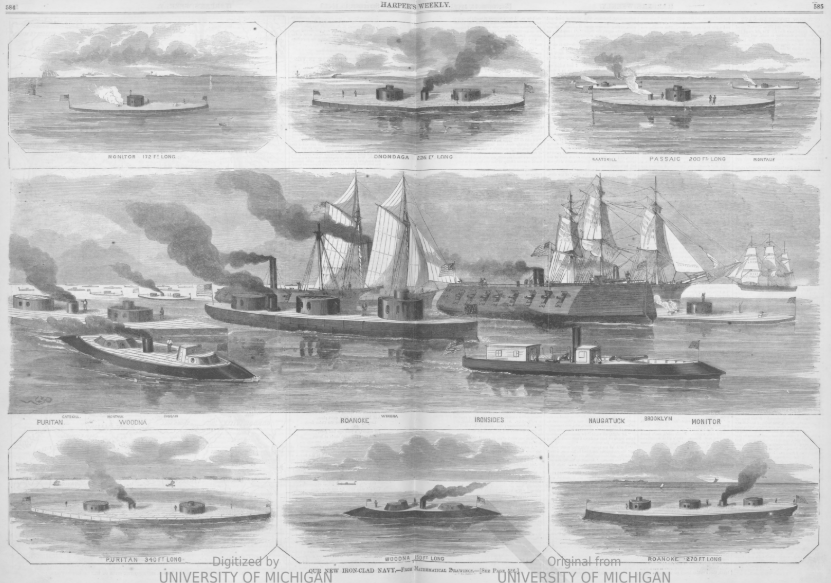
"Our New Iron-Clad Navy," Harper's Weekly, 1862.


Clary Ray, "United States Steamer Monitor," ca. 1900. U.S. Naval History and Heritage Command.
After the battle, numerous countries reformed their navies by building ironclads.
"By…April 1870…practically every naval power in Europe had essayed the new developments in the ironclad genre, whether in the form of broadside, battery, or turret ships, monitors or rams."
Bruce Taylor, “A Global Phenomenon,” June 2020.
The Union worked on over eighty ironclads during the Civil War, including sixty-four monitors.
James P. Delgado, “‘A Symbol of American Ingenuity:’
Assessing the Significance of U.S.S. Monitor,” 1988.
"Our New Iron-Clad Navy," Harper's Weekly, 1862.
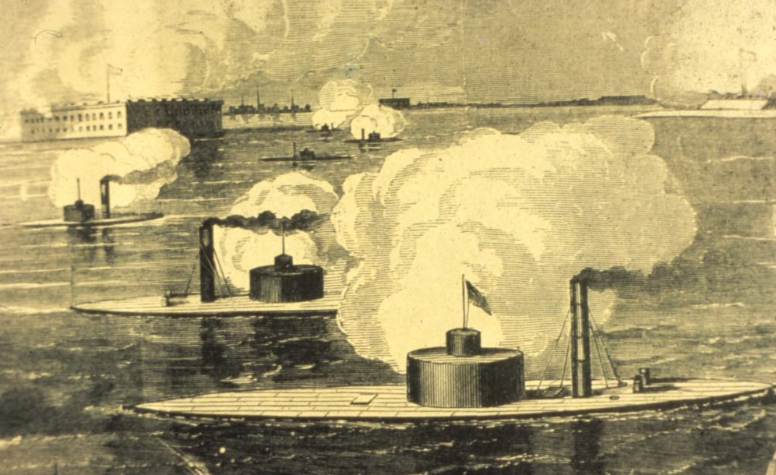
"Fort Sumter in the Distance, Ironclads in the Foreground, Charleston, South Carolina," n.d. Open Parks Library.
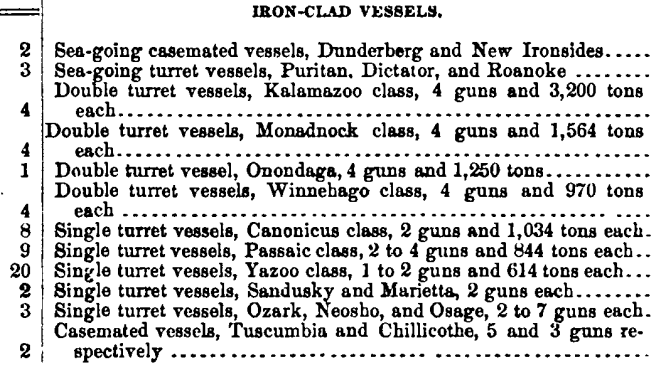
"Vessels Constructed for the Navy since March 4, 1861," In Report on the
Secretary of the Navy with an Appendix Containing Reports from Officers, 1864.
The Confederacy only built twenty-three ironclads, limited by lack of supplies. Many were converted wooden ships.
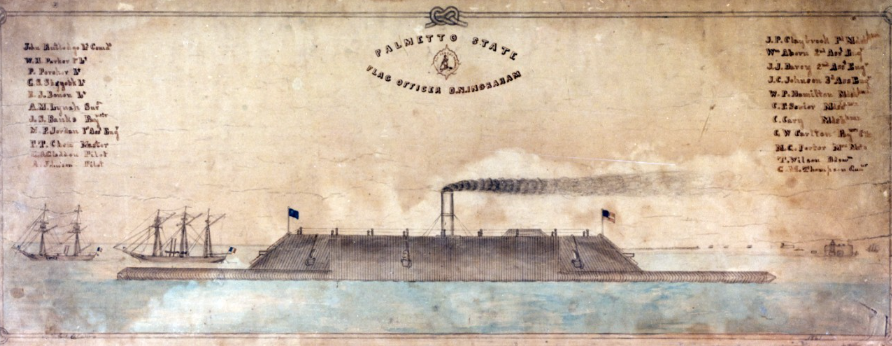
Charles C. Cawson, "Palmetto State Flag Officer D. N. Ingraham," 1862. U.S. Naval History and Heritage Command.
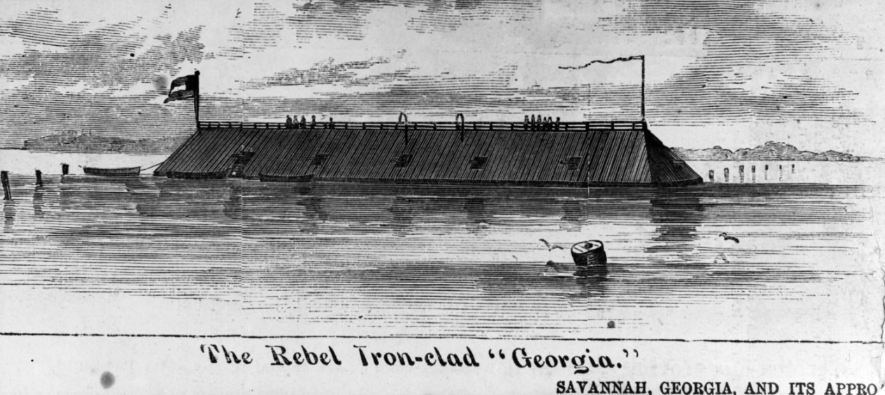
"The Rebel Iron-clad 'Georgia,'" 1863. U.S. Naval History and Heritage Command.
"Confederate ironclads…were not things of beauty. In many ways they were rather primitive men-of-war with serious defects in design and construction. Most of them, however, were serviceable and contributed significantly to the Confederate war effort."
William N. Still Jr., "The Confederate Ironclad Navy," January 2014.
European countries reduced wooden ship construction and began constructing ironclads.
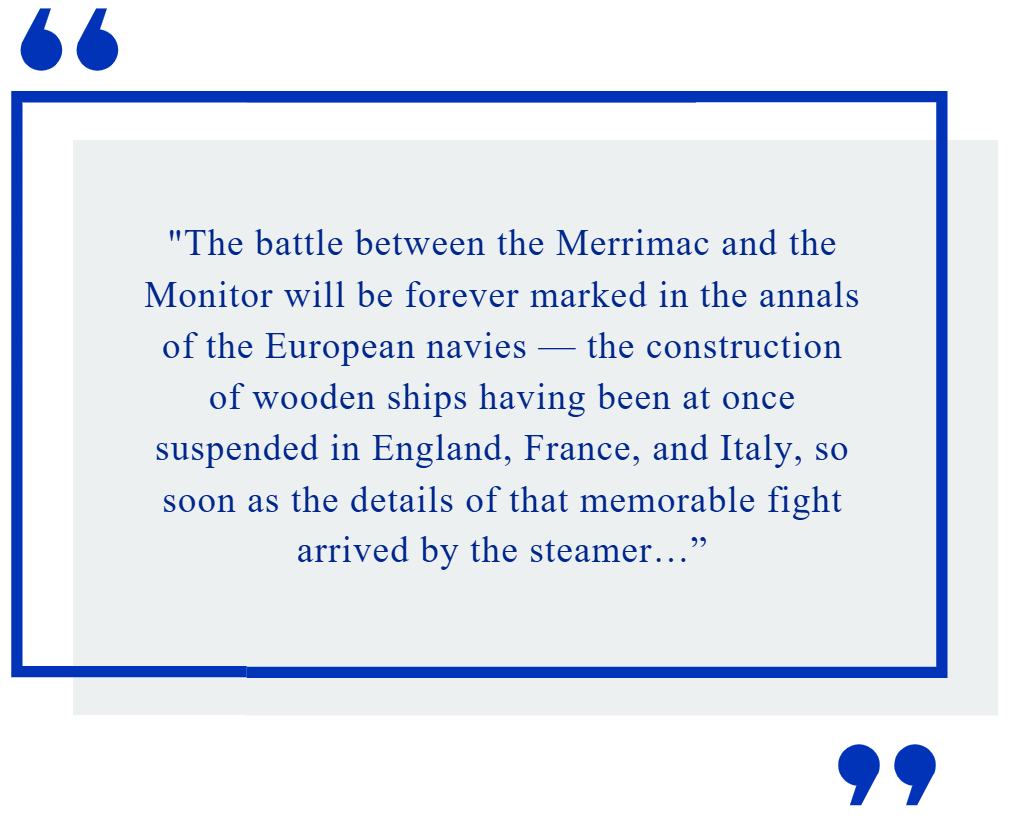
"Iron-Clad Ships in England," Whitewater Register
(Whitewater, WI), May 2, 1862.
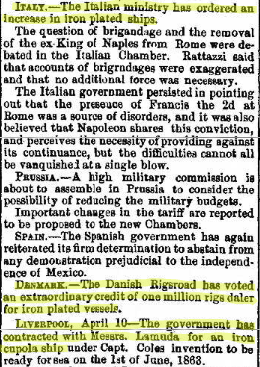
"Telegraphic: Later from Europe," Pennsylvania Daily Telegraph (Harrisburg, PA), April 22, 1862.
"The [British] Admiralty at once proceeded to reconstruct the navy, cutting down a number of their largest ships and converting them into turret or broadside iron-clads. The same results were produced in France, which had but one sea-going iron-clad, La Gloire...The Emperor Napoleon promptly appointed a commission to devise plans for rebuilding his navy. And so with all the maritime powers."
John Taylor Wood, a lieutenant on the Virginia.
"The First Fight of Iron-Clads," The Century Illustrated, March 1885.
Even smaller countries like Denmark, Peru, and the Netherlands ordered ironclads built in Britain and France.
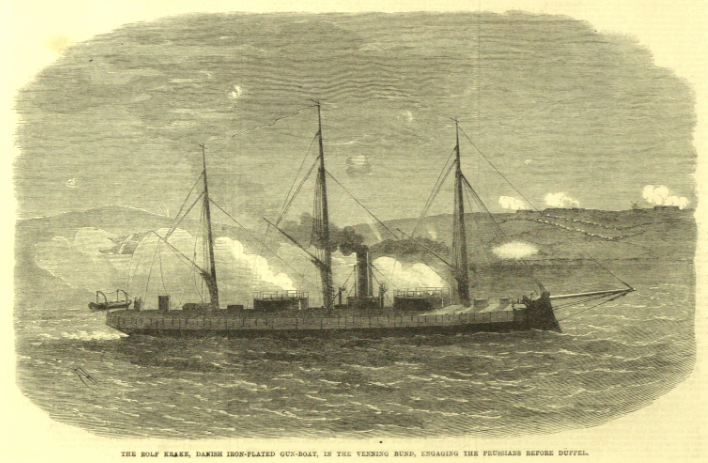
"The Rolf Krake, Danish Iron-Plated Gun Boat, in the Venning Bund, Engaging the Prussians before Duppel," The Illustrated London News, April 23, 1864.
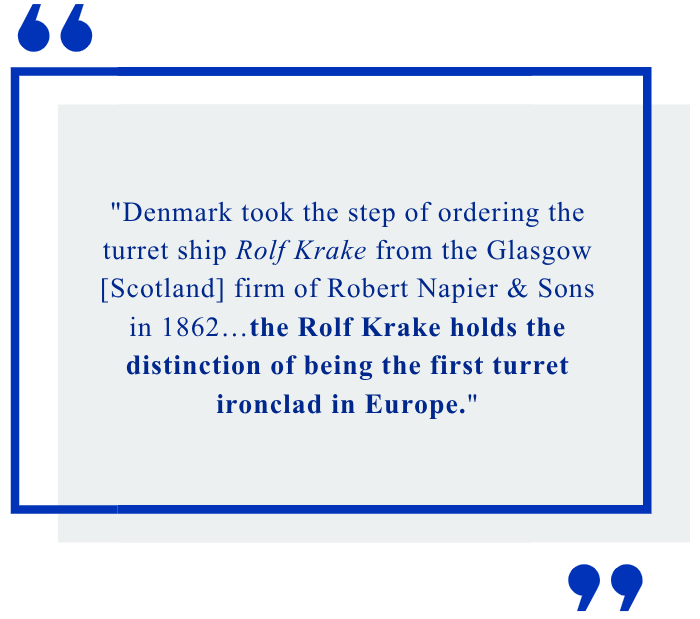
Bruce Taylor, “A Global Phenomenon,” June 2020.
The transition to ironclads was an important reform caused by the Monitor.