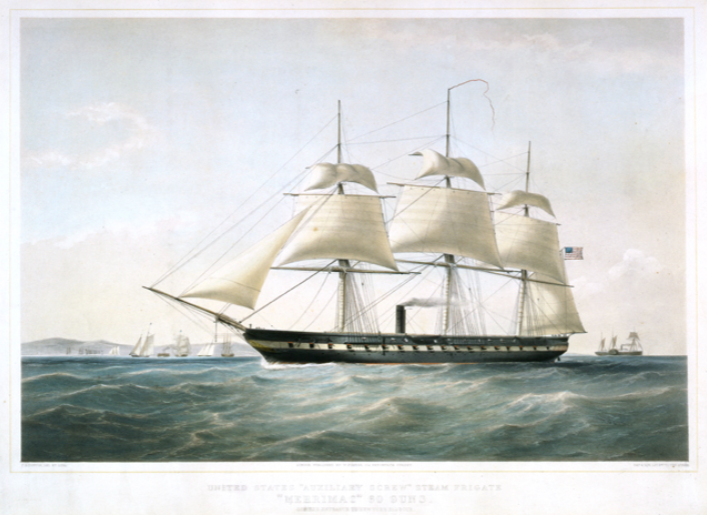
"United States Auxiliary Screw Steam Frigate Merrimac 60 Guns," ca. 1861. The Mariner's Museum and Park.


Clary Ray, "United States Steamer Monitor," ca. 1900. U.S. Naval History and Heritage Command.
"The South's decision to deploy ironclads, as exemplified by the hasty conversion of the USS Merrimac into the CSS Virginia in February and March 1862, forced the North to organize its industry to build an ironclad navy of its own."
Stephen C. Thompson, "The Design and Construction of 'USS Monitor,'" 1990.
In June 1861, the Confederacy began converting the former Union frigate Merrimack into an ironclad ship in Norfolk, Virginia.
"United States Auxiliary Screw Steam Frigate Merrimac 60 Guns," ca. 1861. The Mariner's Museum and Park.
Wiliam Norris, a sailor on the Virginia.
The Story of the Confederate States' Ship "Virginia" (once
Merrimac): Her Victory over the Monitor: Born March 7th, Died May 10th, 1862, 1879.
"Affairs at Norfolk," New York Daily Tribune,
November 19, 1861.
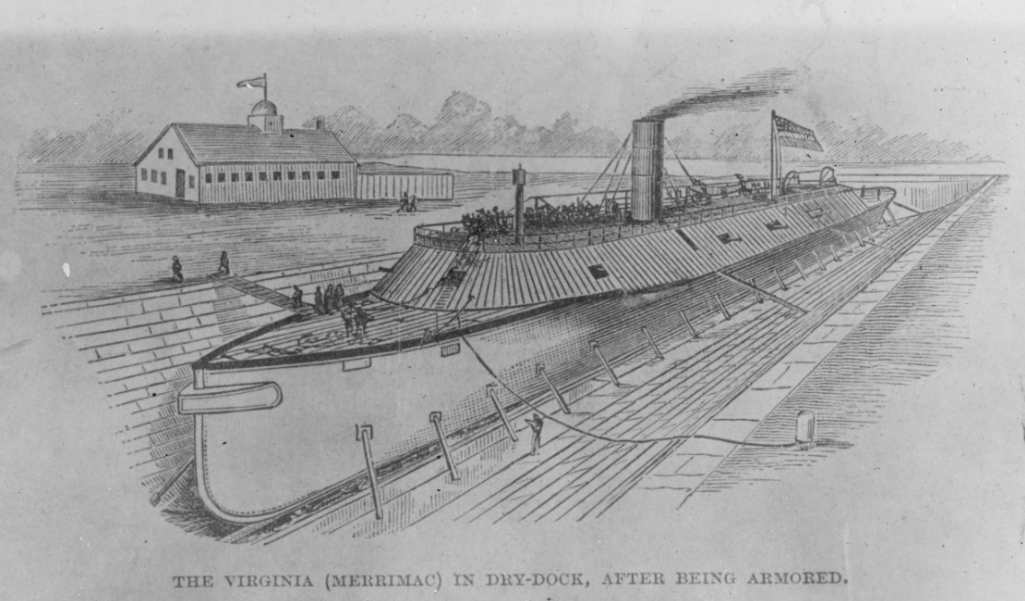
"The Virginia (Merrimac) in Dry Dock, After Being Armored," ca. 1862. U.S. Naval History and Heritage Command.
The new ship was christened CSS Virginia, but many continued to call it “Merrimack.”
News of the Virginia’s conversion sparked fears it could break the Union blockade.
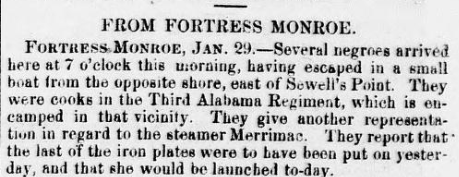
. "From Fortress Monroe," Daily National Intelligencer (Washington, D.C.), January 31, 1862.
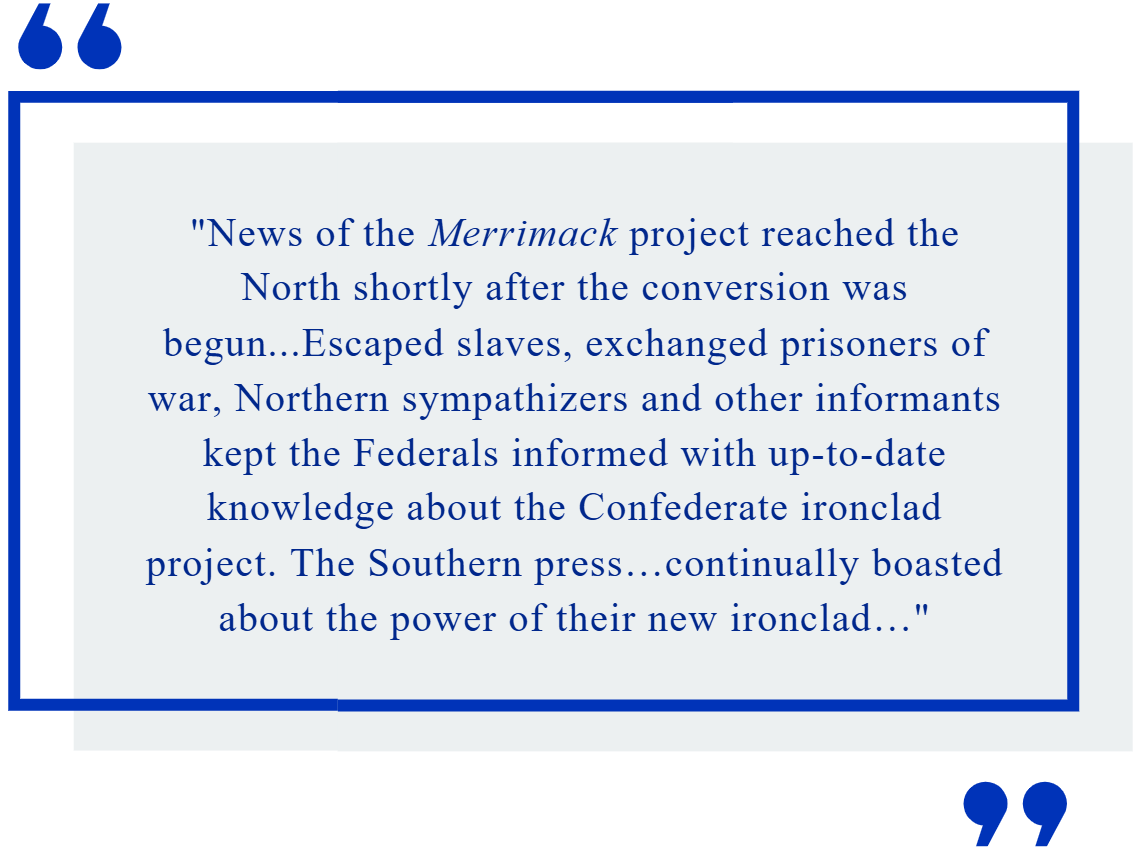
John V. Quarstein, Monitor Boys:
The Crew of the Union's First Ironclad, 2011.
"...the much vaunted iron-clad, rebel steamer Merrimac, might, if she possesses the wonderful powers of destruction claimed for her, by her Southern owners, by a sudden charge upon us, do incalculable damage with her sub-aqueous beak. It would be no small or insignificant evening’s work for the terrible Merrimac to run the blockade from Norfolk here, sink a dozen or so of our valuable transports with all on board…"
"The Great Southern Expedition --- Rehearsing of the Landing --- Sailing of the Fleet," Daily Commercial Register (Sandusky, OH), October 31, 1861.
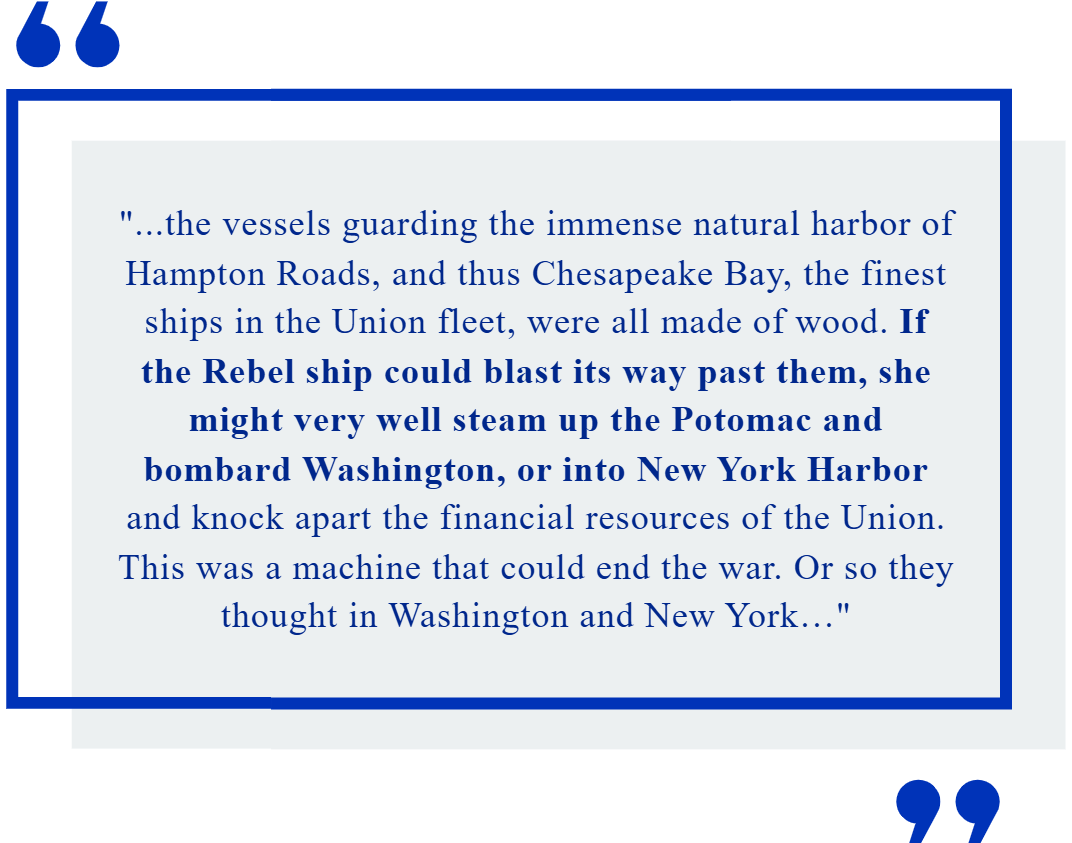
Richard Snow, Iron Dawn: The Monitor, the Merrimack, and the Civil War Sea Battle That Changed History, 2016.
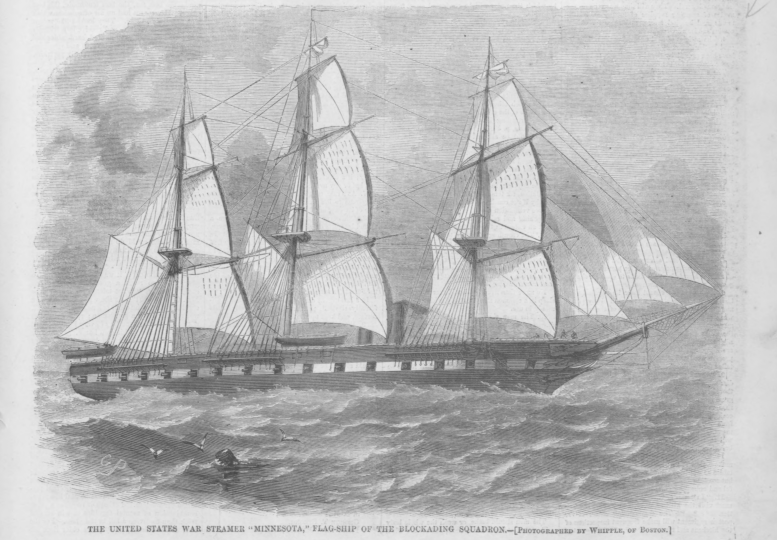
"The United States War Steamer 'Minnesota,' Flag-ship of the Blockading Squadron," Harper's Weekly, August 24, 1861.
In reaction, the Union decided it needed its own ironclad to match the Virginia.
"Though the cost might be high, the United States could ill-afford not to build an ironclad to answer the Rebel challenge. And it had to be done before either of the European countries had made a commitment to either side."
Stephen C. Thompson, "The Design and Construction of 'USS Monitor,'" 1990.
In August 1861, Congress approved $1.5 million for ironclad construction.
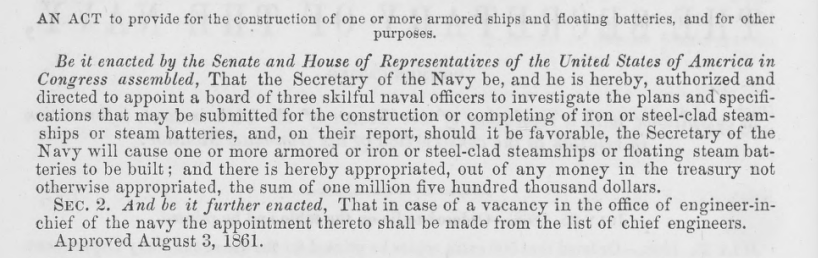
Gideon Welles, "Letter of the Secretary of the Navy," 1868.
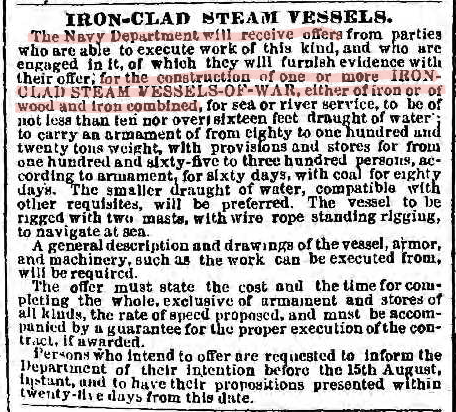
"Iron-Clad Steam Vessels," The New York Times, August 16, 1861.
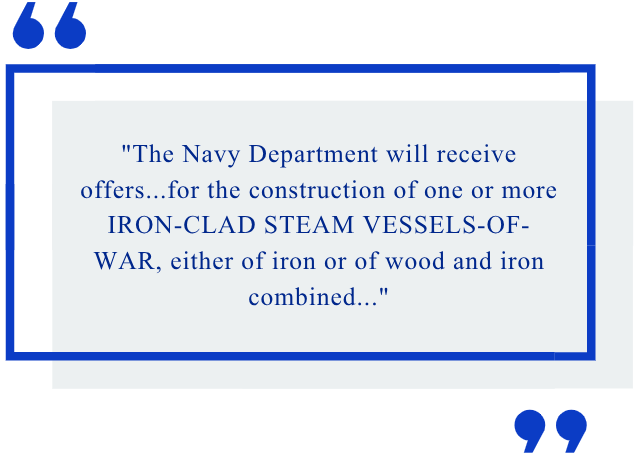
"Iron-Clad Steam Vessels," The New York Times, August 16, 1861.
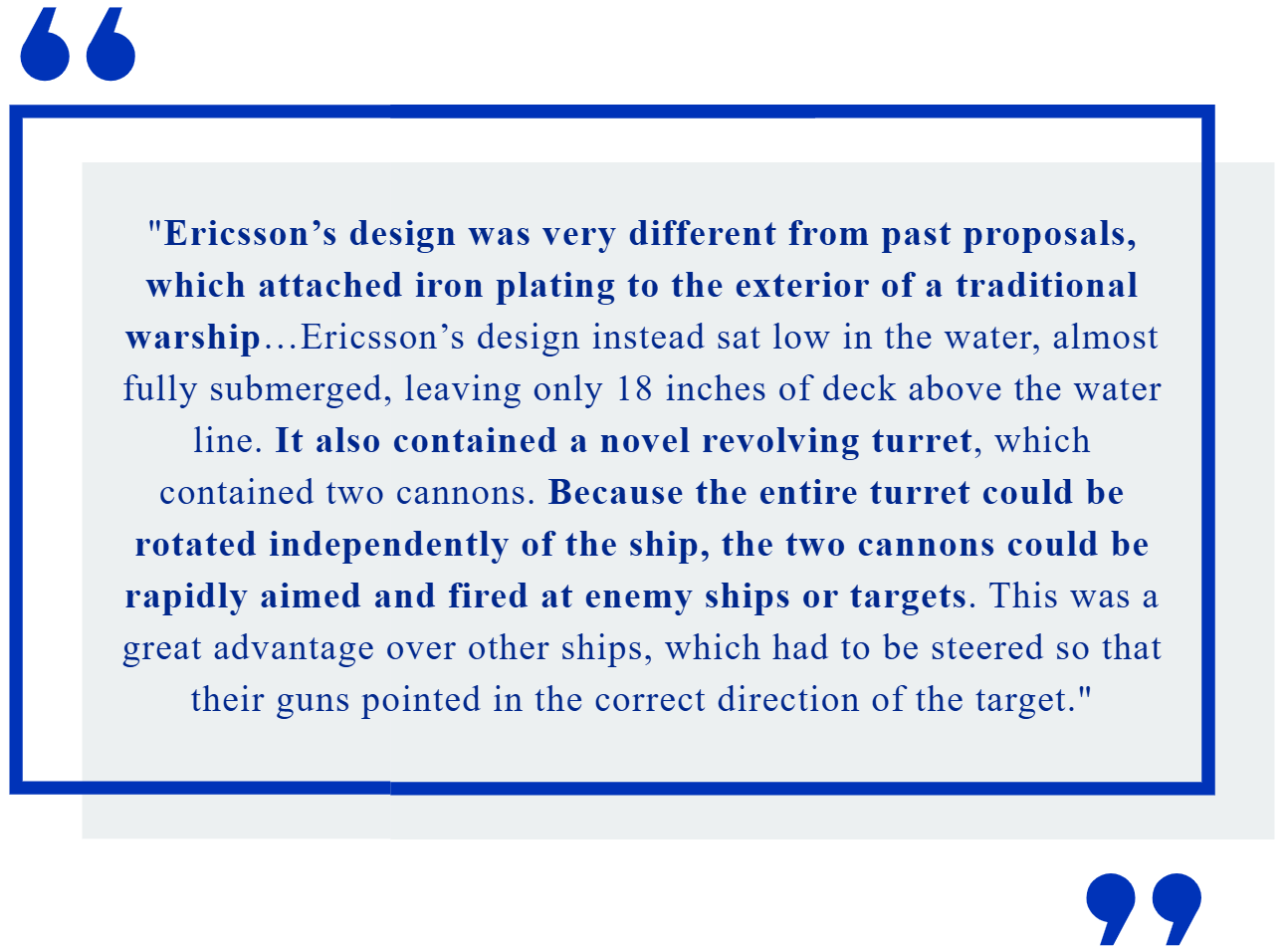
The Navy soon approved the design of an ironclad named the Monitor, designed by Swedish inventor John Ericsson. It was a small ship with only two guns in a revolving turret — a novel design that allowed fire in any direction.
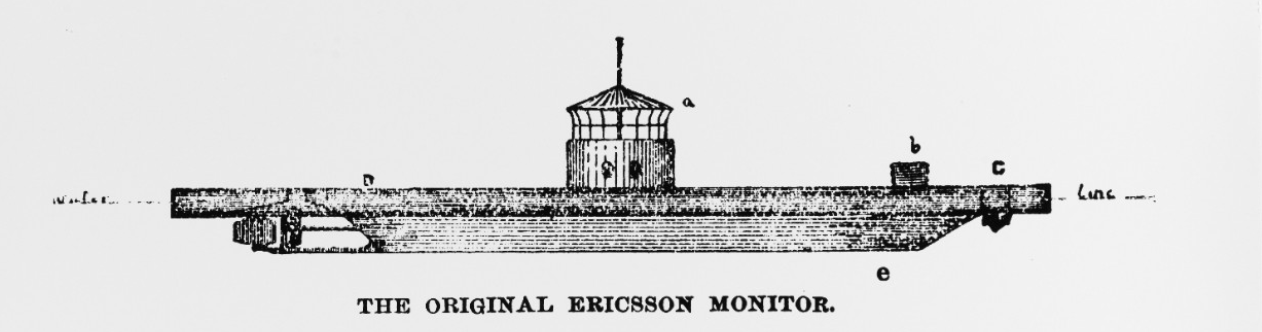
"The Original Ericsson Monitor," 1896. U.S. Naval History and Heritage Command.
"Ironclad Navies: The USS Monitor and CSS Virginia during the Civil War,"
March 18, 2018.
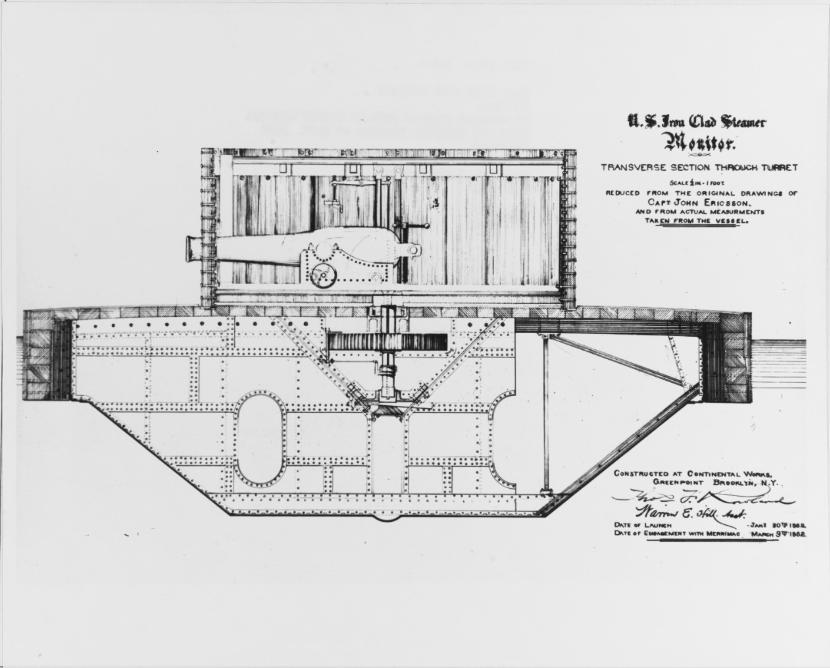
"U.S. Iron Clad Steamer Monitor. Transverse Section Through Turret," 1862. U.S. Naval History and Heritage Command.
The Monitor’s design was heavily influenced by the threat from the Virginia.
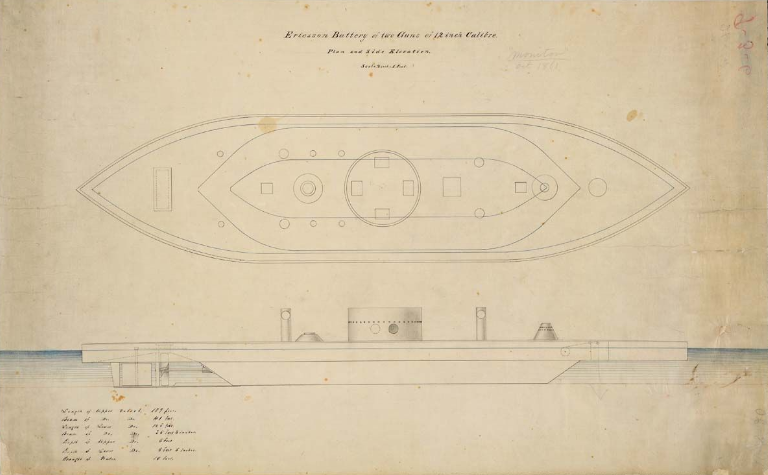
"Side Elevation of the U.S.S. Monitor," 1861. National Archives.
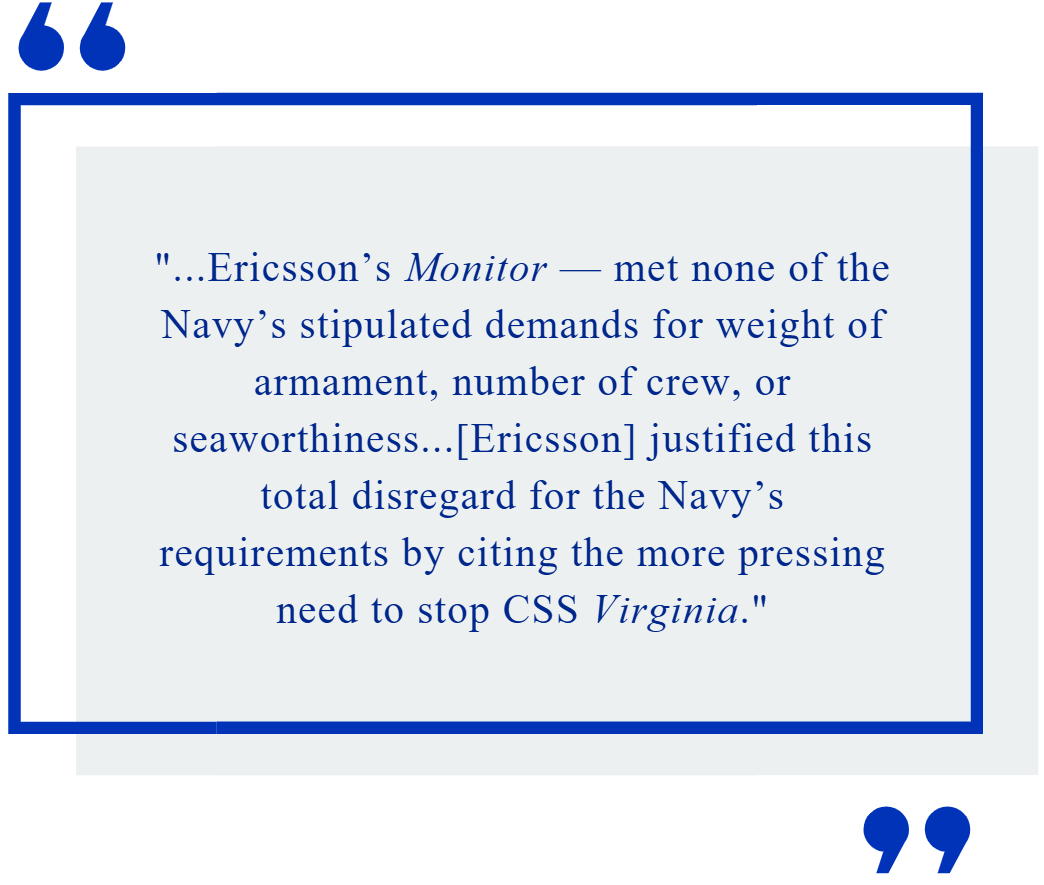
Ferreiro, Larrie D. "The Wrong Ship at the Right Time:
The Technology of USS Monitor and Its Impact on Naval
Warfare," 2021. International Journal of Naval History.
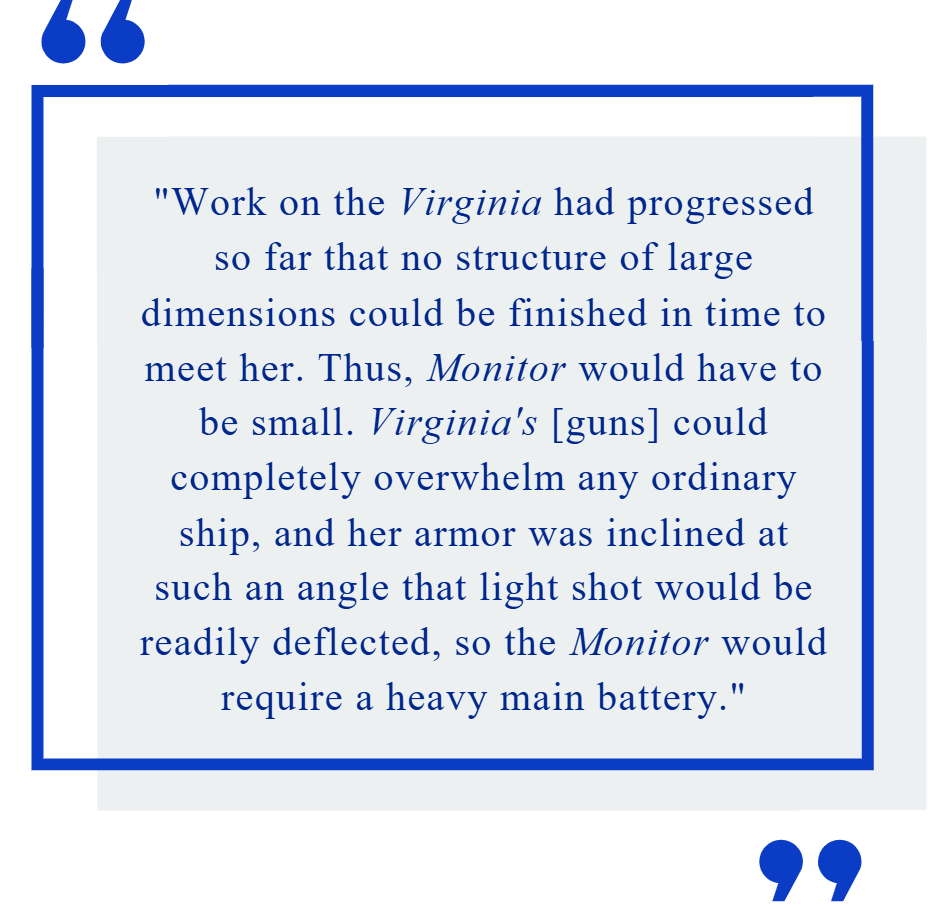
James P. Delgado, “‘A Symbol of American Ingenuity:’
Assessing the Significance of U.S.S. Monitor,” 1988.
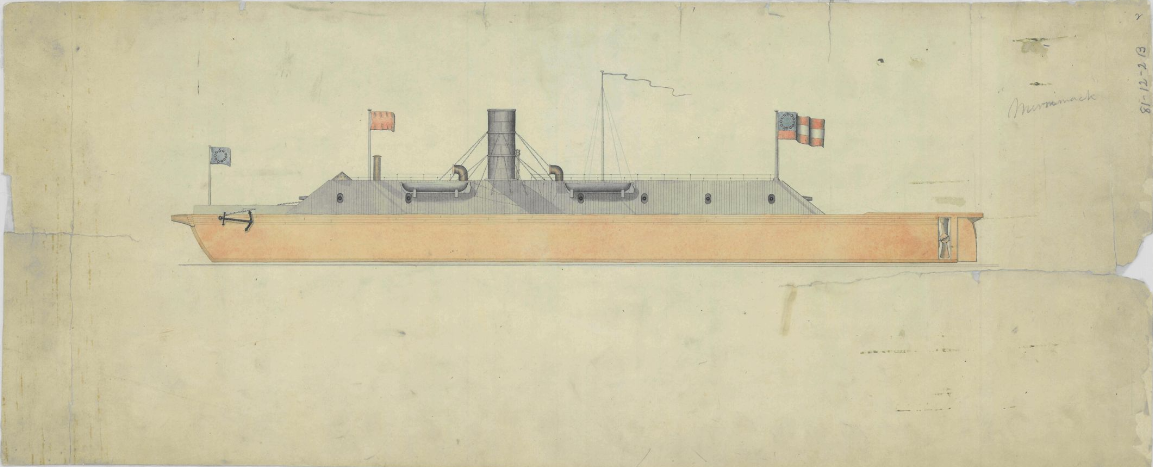
"Sketch of the CSS Virginia," n.d. National Archives..
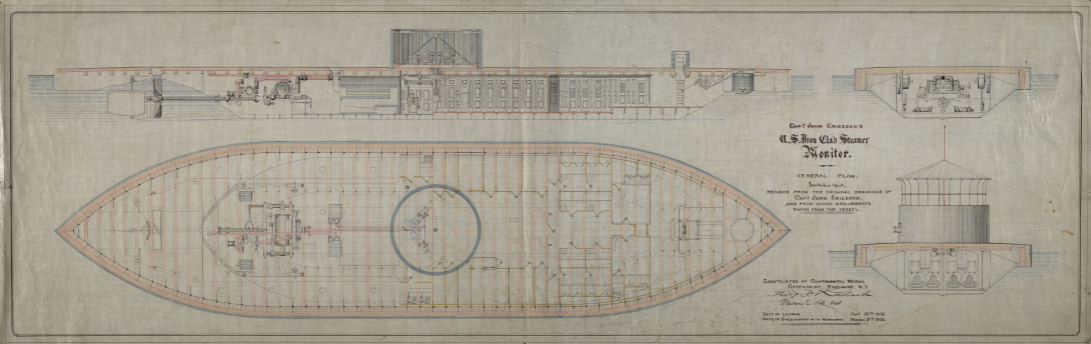
"Capt. John Ericsson's U.S. Iron Clad Steamer Monitor: General Plan," 1862. The Mariner's Museum and Park.
"Several features of Ericsson’s original design were discarded or modified due to the rush to complete the vessel to counter the Merrimack threat. Ericsson had proposed to arm his ironclad with his own steam gun and proto-torpedoes…but these weapons were replaced by a conventional pair of XI-inch Dahlgren smoothbores. He had initially planned a sloping deck; instead, a simpler flat deck was constructed. The turret was originally conceived as a hemispheric turret. It, too, was replaced with a less complex, cylindrical turret."
John V. Quarstein, "Monitor Boys: The Crew of the Union's First Ironclad," 2011.
Construction began in October 1861, and the ship was launched on January 30, 1862, around 100 days later.
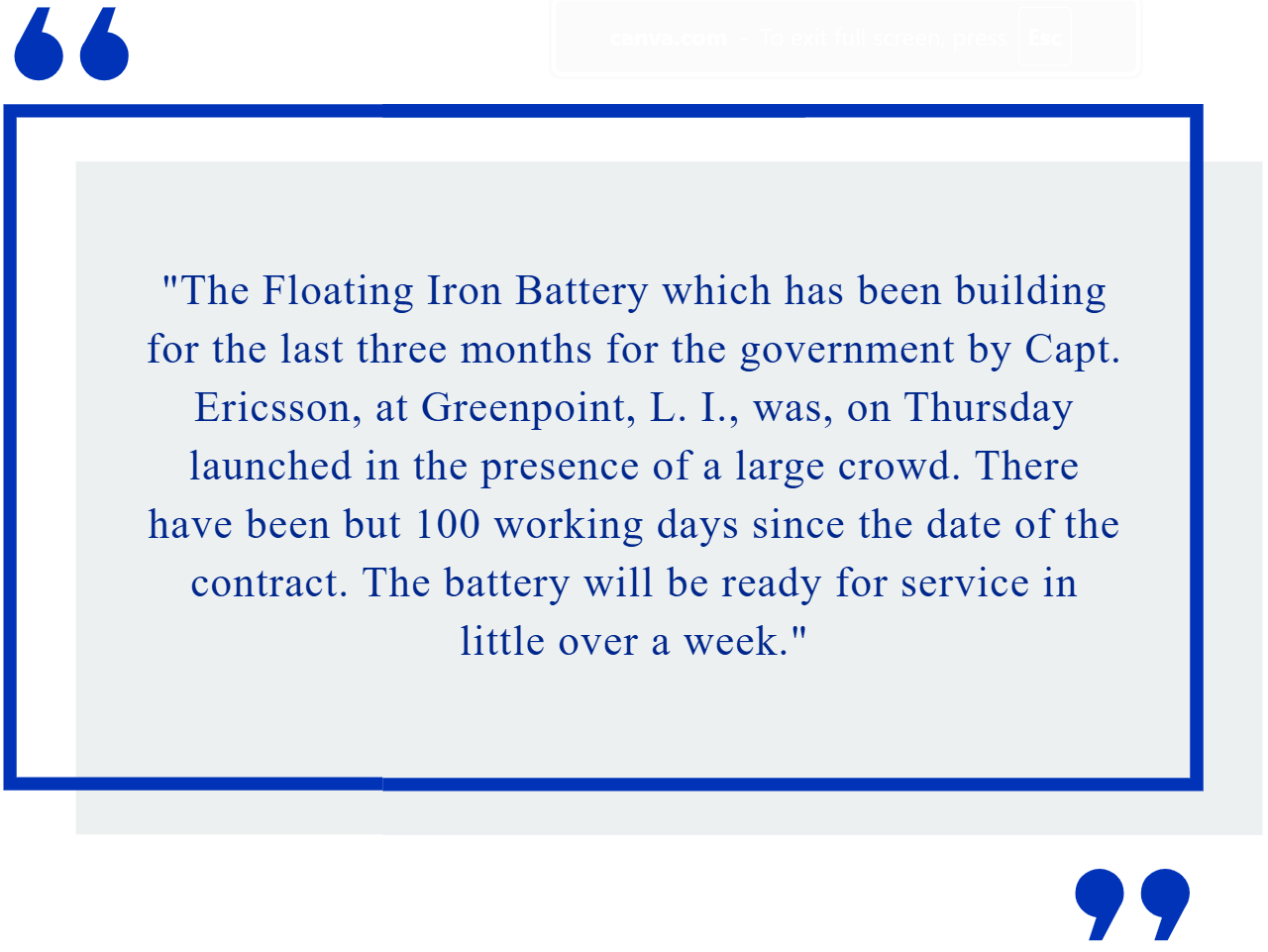
"The Floating Iron Battery." Sunday Dispatch (New York, NY),
February 2, 1862.
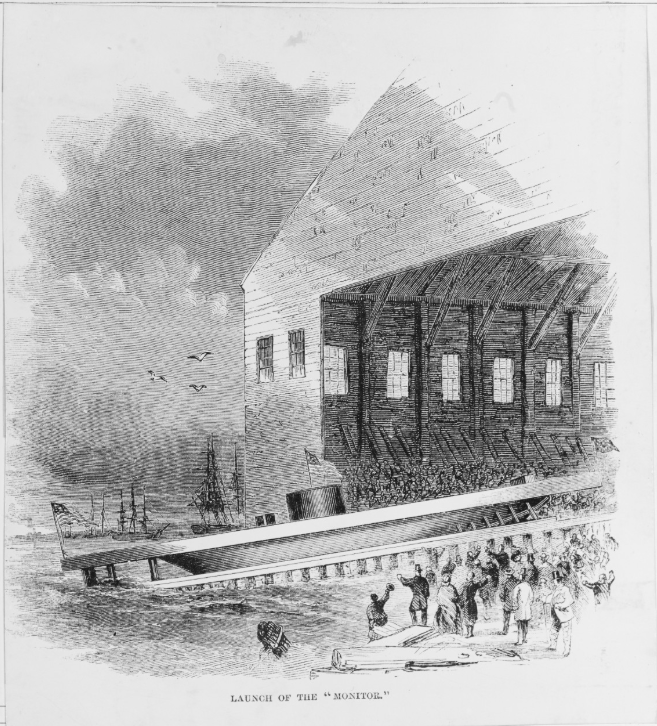
"Launch of the 'Monitor,'" 1862. U.S. Naval History and Heritage Command.
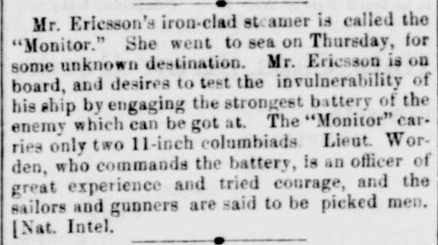
"By Telegraph." Burlington Daily Hawk-Eye (Burlington, IA). March 7, 1862.
On March 6th, Monitor departed for Hampton Roads to confront the Virginia.