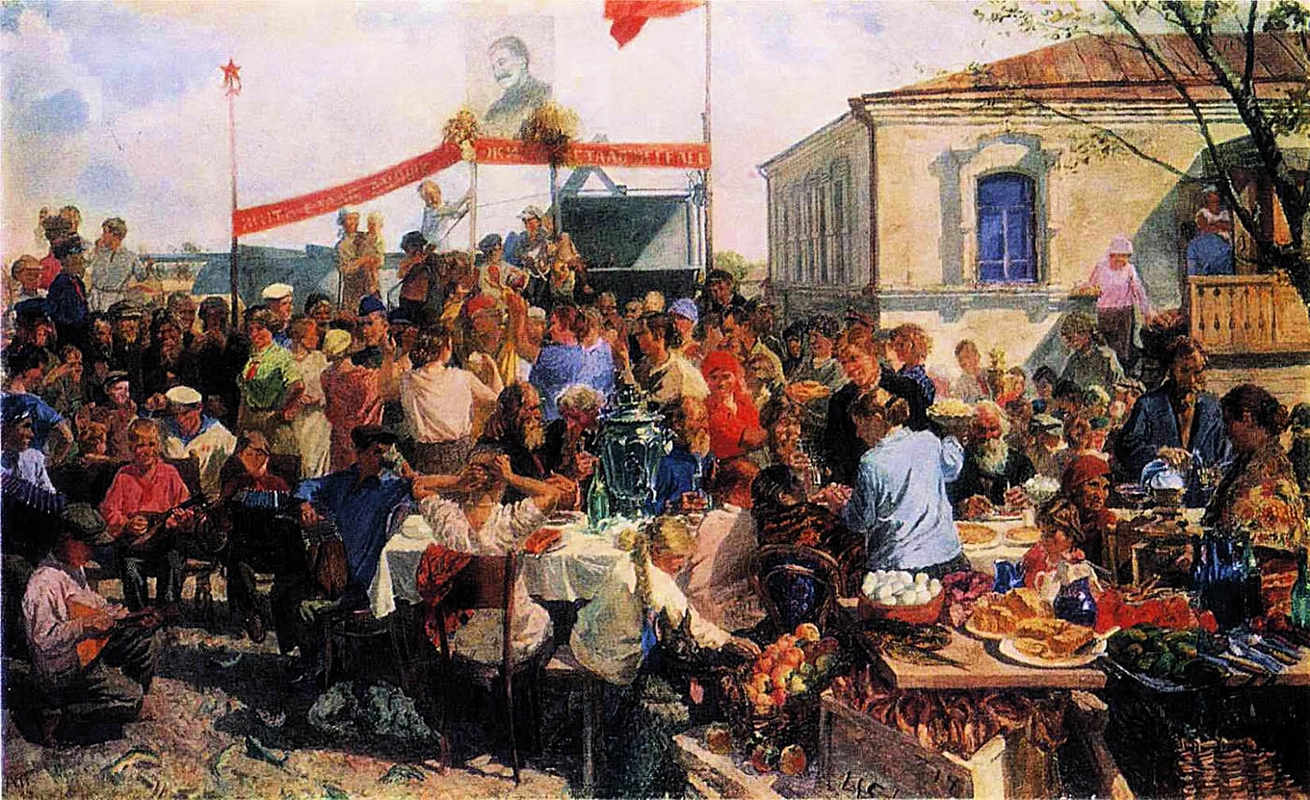
Arkady Plastov, Collective Farm Celebration, 1937
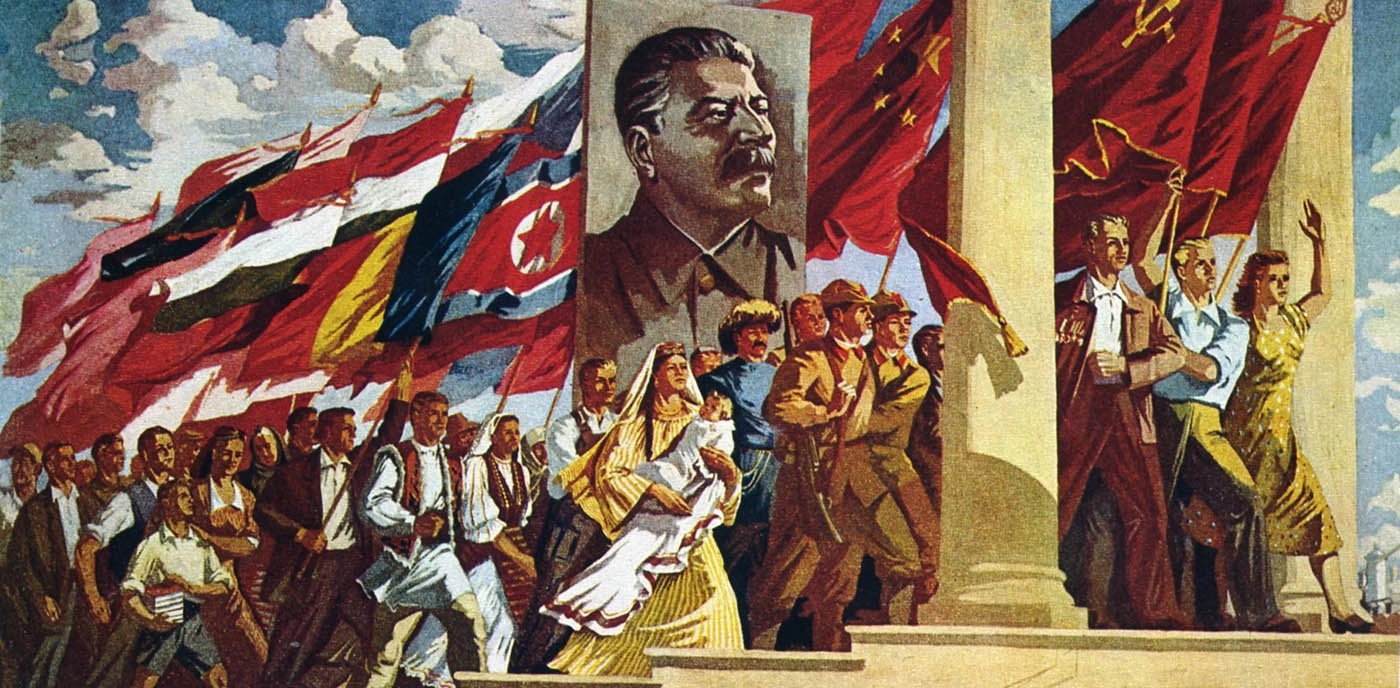
Jules Perahim, Fighting for Peace, 1950
Socialist Realism
Socialist Realism was the official art style of the Soviet Union. It was used to portray a version of the state where everyone was working in harmony and surplus, a harsh contrast to the suffering happening under Stalin's rule.
"Socialist realism is the basic method of Soviet Iiterature and Iiterary criticism. It demands from the artist a truthful and historically concrete representation of reality in its revolutionary development." -First All-Union Congress of Soviet Writers, 1934
Arkady Plastov, Collective Farm Celebration, 1937
Western European intellectuals saw Socialist Realism as blatant state-imposed propaganda that was suppressing freedom of expression and forcing conformity.
"The citizen of the totalitarian state is expected and forced not only to abstain from crime but to conform in all his thoughts and actions to a prescribed pattern."
Manifesto of the Congress for Cultural Freedom, 1950
"But I think that what we did really was to recognise the difference. It was recognised that Abstract Expressionism was the kind of art that made Socialist Realism look even more stylised and more rigid and confined than it was. And that relationship was exploited in some of the exhibitions." -Donald Jameson, CIA
Abstract Expressionism was a direct contrast from Socialist Realism, making it very smart for the CIA to use it to gain European support for the US during the Cold War.