
Anesthesia is typically administered in gas form. [Westend61/Getty Images]
In modern society, anesthesia is widely used and considered standard practice in surgical operations. There have been many changes in both the gas and chemical components since 1846. Today, several different types exist.
Anesthesia is typically administered in gas form. [Westend61/Getty Images]
Interview with Dr. Terry Huang, Clinical Director, Department of Anesthesiology, CHI Health Creighton UMC, Assistant Professor, Creighton University School of Medicine, courtesy of Amelia Cheng, Zoom interview
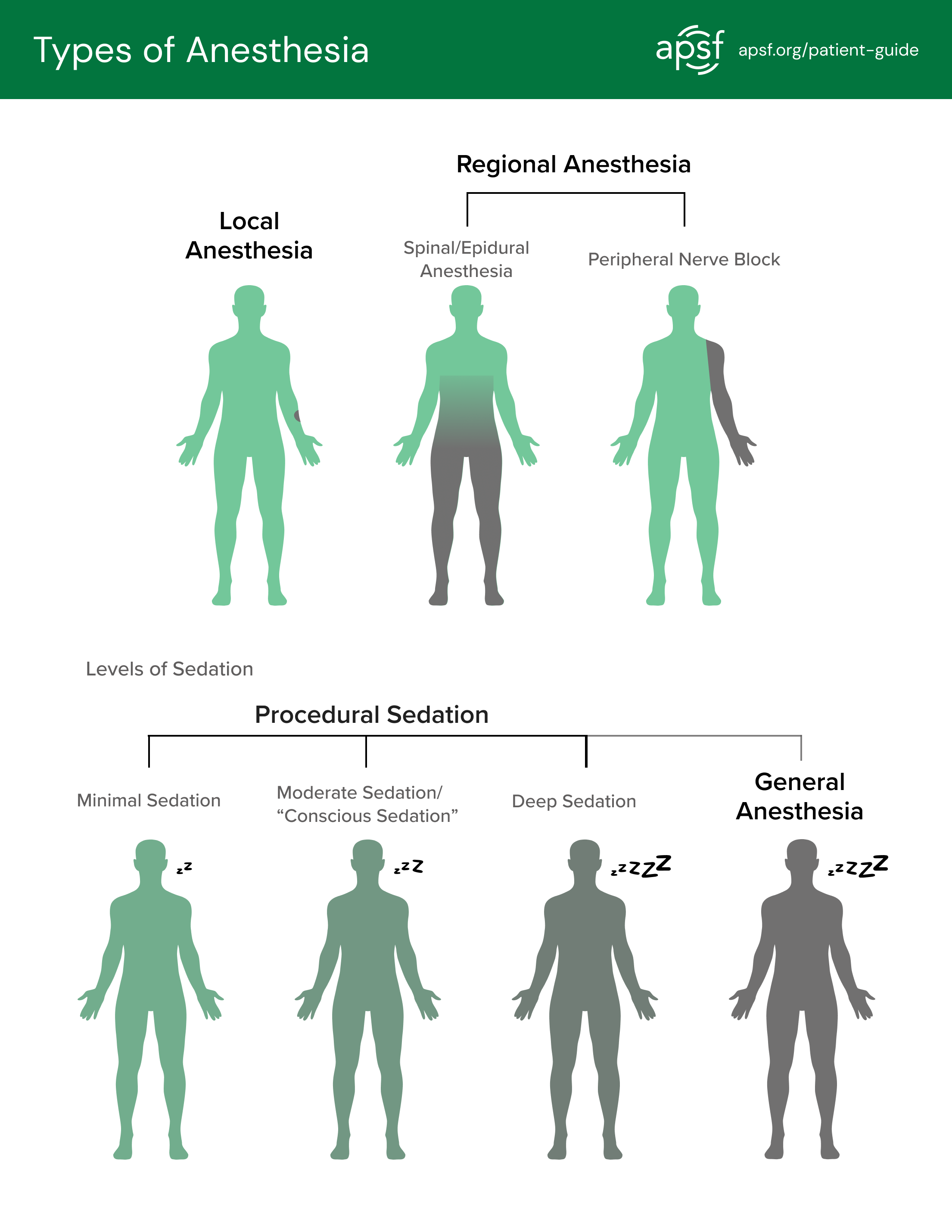
There are four main types of anesthesia. Each can be used in different situations depending on the nature of the procedure and the patient’s needs. [Anesthesia Patient Safety Foundation]
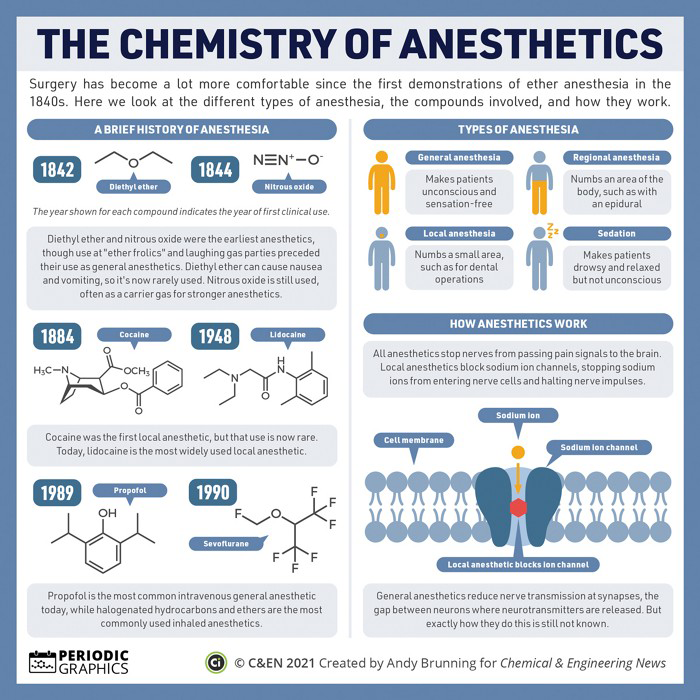
The chemistry of anesthetics has advanced since the 1840s, producing different types of anesthesia depending on the compounds involved. [National Institute of General Medical Sciences]
Additionally, the advent of anesthesia has lowered surgery mortality rates and revolutionized medical knowledge. The ability to prolong surgeries provided surgeons time to learn more about internal organs, enabling establishment of specialties like heart surgeons, the sciences of pathology, etc. This discovery also caused reforms in medical procedures, creating safety protocols and anesthesia application requirements.
The introduction of anaesthesia changed all of this. Surgery could slow down – become more accurate and could move into ‘forbidden areas’ of abdomen, chest and brain. "
-World Federation of Societies of Anaesthesiologists
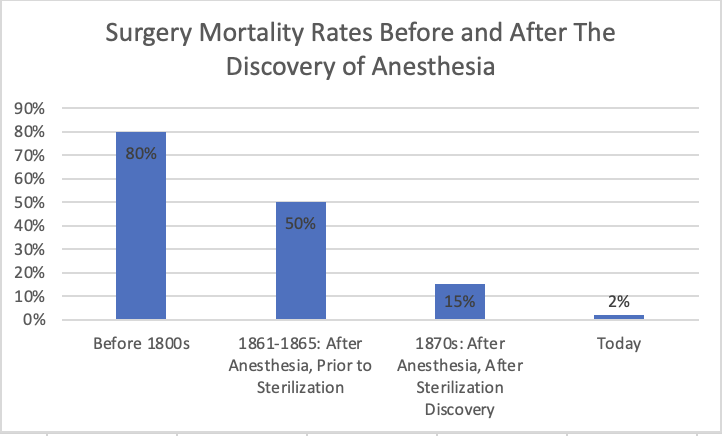
Surgery mortality rates also lowered after this discovery, and even more after sterilization of surgical tools was discovered.
[Past Medical History/ Mayo Clinic]
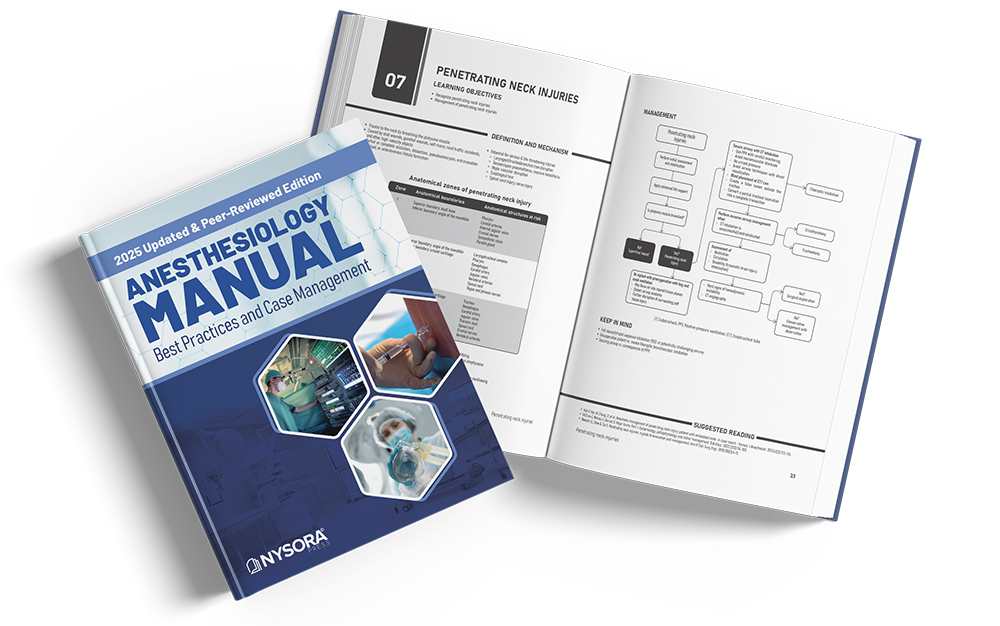
This manual is an essential guide for students, residents, and experienced practitioners to confidently manage complex clinical scenarios.
[courtesy of NYSORA]