Social Security Explained 1936 film - Courtesy of Internet Archives
A New Deal for America: How Social Security Redefined Government's Role
Creation of Social Security
The idea of Social Security began in the late eighteenth century when Thomas Paine proposed old-age assistance in 1795. By the early twentieth century, several European nations had established worker insurance systems, and the United States had begun providing benefits to disabled Civil War veterans. During the 1920s, some states attempted to create old-age pension programs, but many proved ineffective or unconstitutional.
Insert your text here
"An Act to provide for the general welfare by establishing a system of Federal old-age benefits, and by enabling the several States to make more adequate provision for aged persons, blind persons, dependent and crippled children, maternal and child welfare, public health, and the administration of their unemployment compensation laws."
Social Security Administration
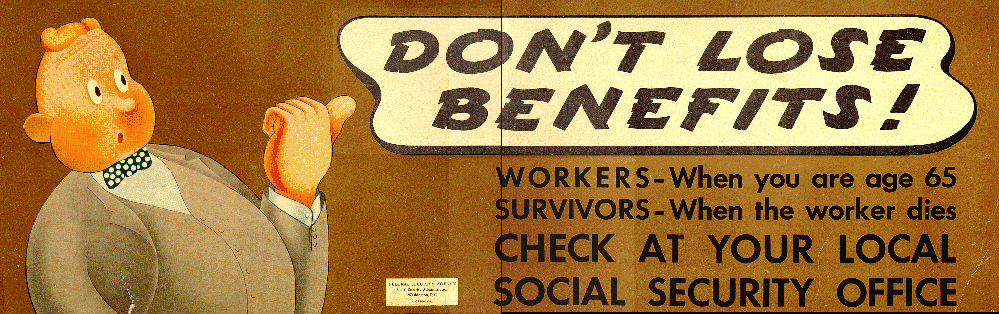
Courtesy of Social Security History
Support for federal action grew with the popularity of Dr. Francis Townsend’s pension plan, which reflected increasing concern over elderly poverty. In 1934, more than half of elderly Americans were living in poverty.
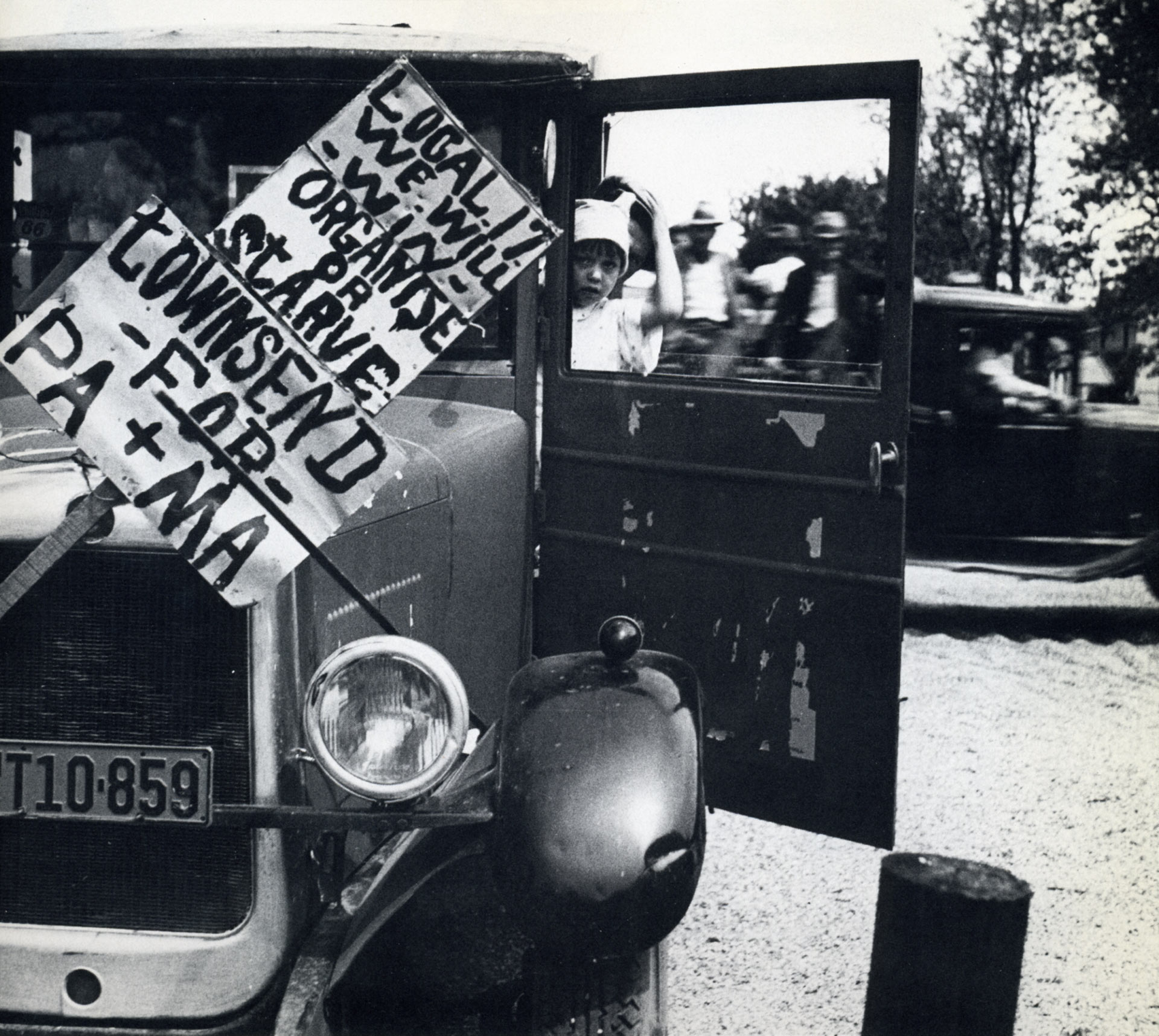
"Townsend supporters rally in Columbus"
Library of Congress
"It is estimated that the population of the age of 60 and above in the United States is somewhere between nine and twelve million. I suggest that the national government retire all who reach that age on a monthly pension of $200 a month or more, on condition that they spend the money as they get it."
Francis Townsend - Courtesy of American History
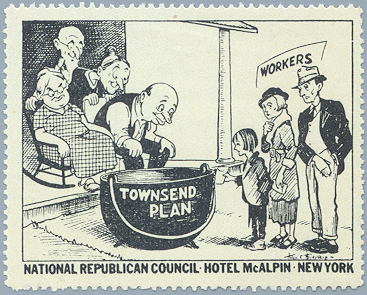
Courtesy of Social Security History
In response, President Roosevelt created the Committee on Economic Security in 1934, led by Labor Secretary Frances Perkins. With guidance from legal and economic advisers, Perkins proposed a system in which workers and employers would contribute payroll taxes to fund future benefits rather than rely solely on government assistance. Within six months, a team led by Arthur Altmeyer studied old-age pensions, unemployment insurance, and related issues. Their January 1935 report recommended a payroll-tax-funded retirement insurance system and additional assistance programs. These recommendations became the foundation of the Social Security Act.
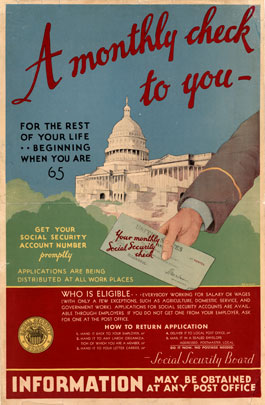
Courtesy of Library of Congress
"Every qualified individual shall be entitled to receive, with respect to the period beginning on the date he attains the age of sixty-five...and ending on the date of his death, an old-age benefit (payable as nearly as practicable in equal monthly installments)."
Social Sercurity Administration
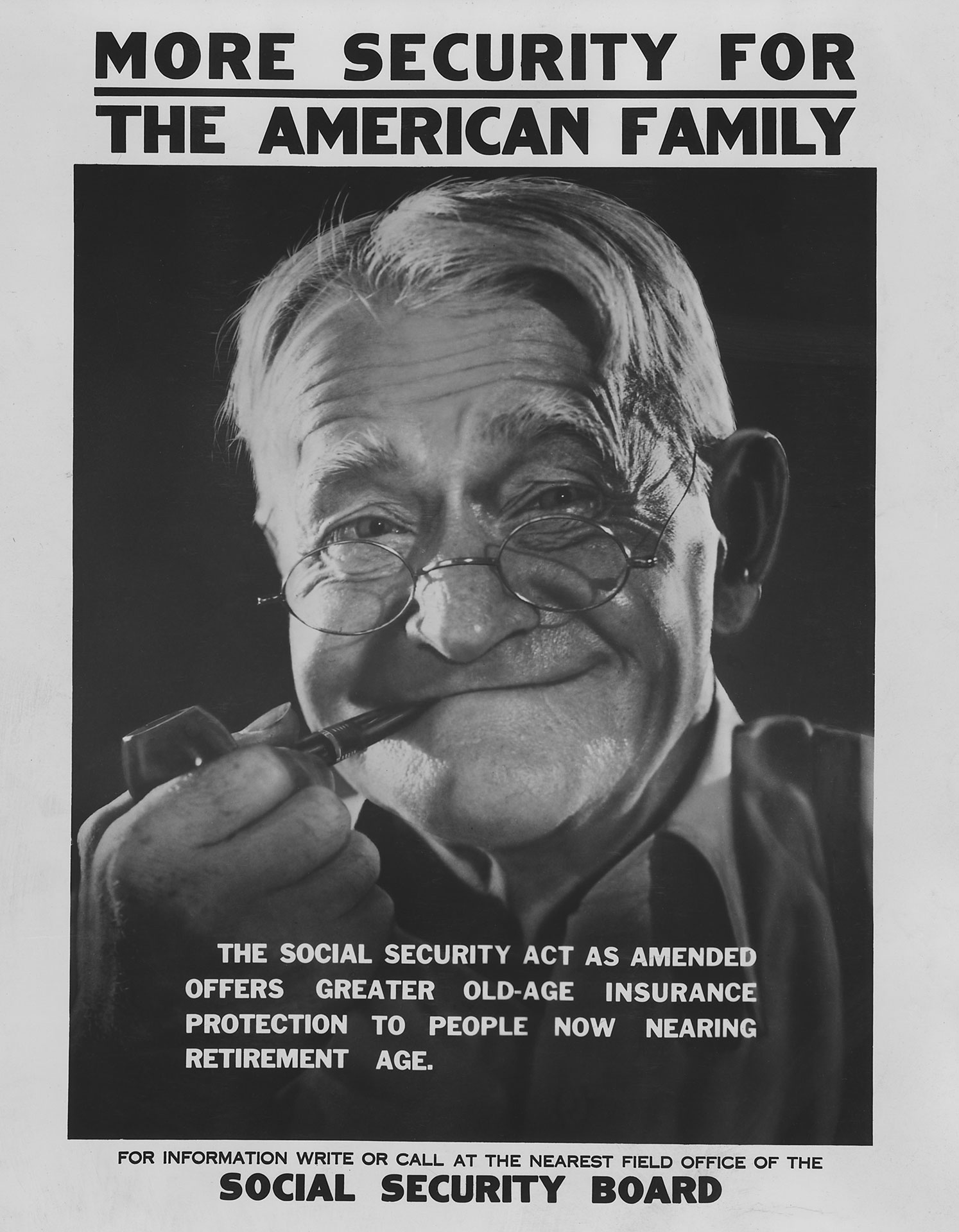
Courtesy of Franklin D. Roosevelt Library
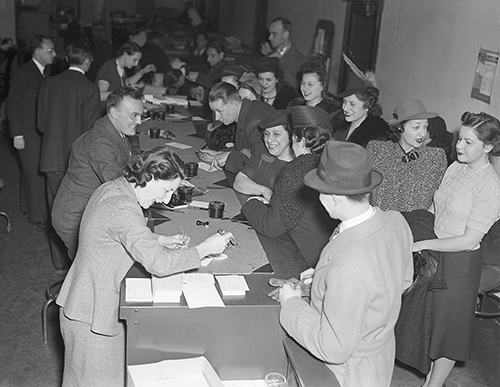
"New Yorkers sign up for Social Security in 1939" Couresty of Getty Images
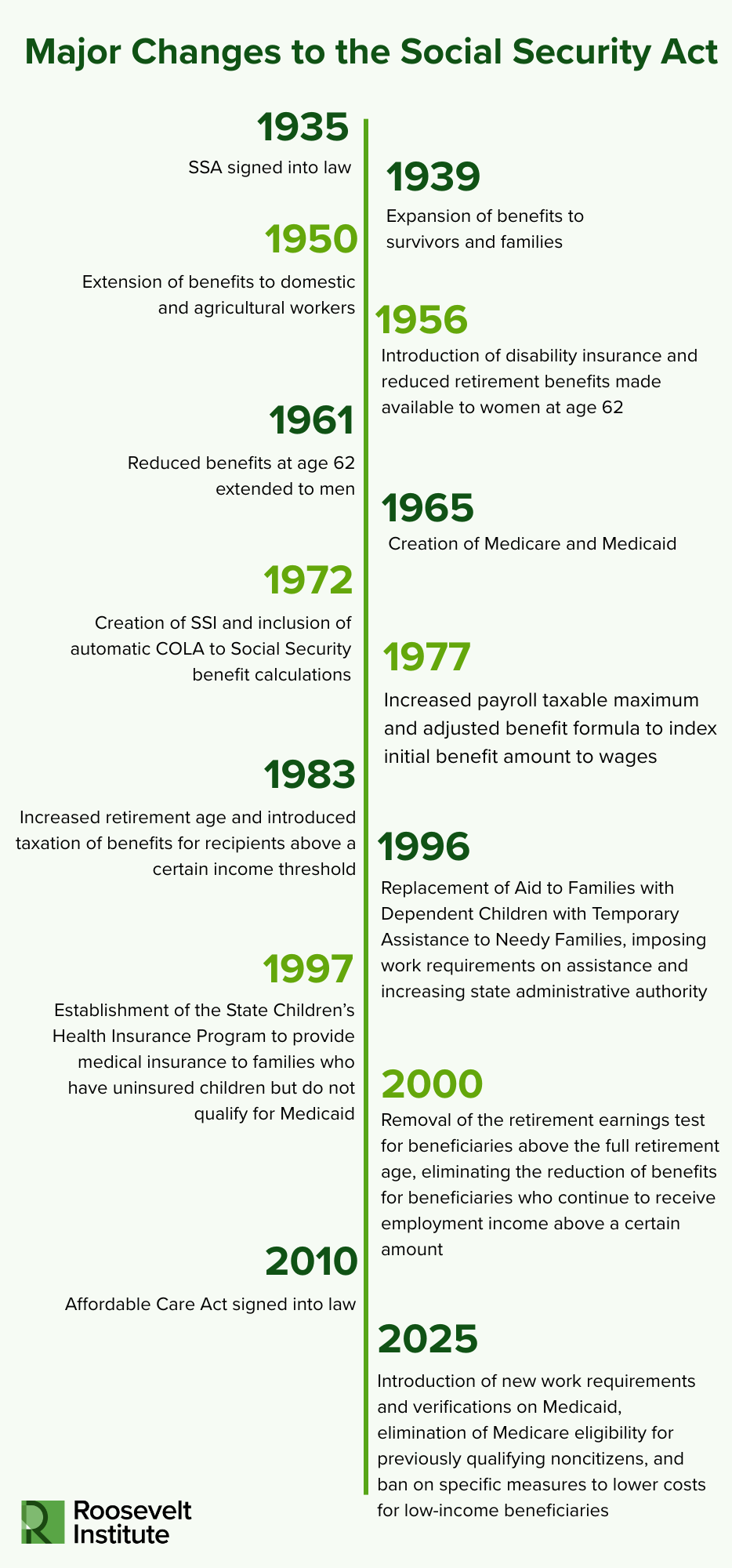
Courtesty of Roosevelt Institute