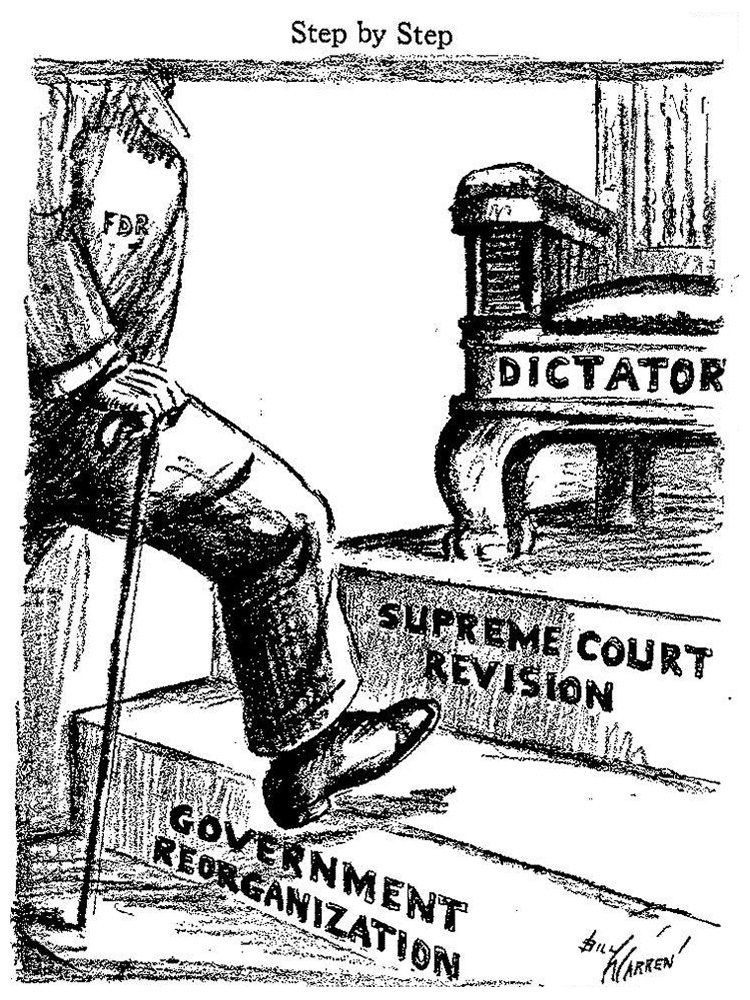
Courtesy of Library of Congress
A New Deal for America: How Social Security Redefined Government's Role
Critics argued that the economic hardship of the Great Depression stemmed largely from the unequal distribution of wealth, a problem they believed Roosevelt’s Social Security plan failed to solve. Opponents claimed the program would make citizens dependent on government aid and discourage self-reliance. They also argued that providing for citizens’ welfare was the responsibility of state governments rather than the federal government.
" This question is the basis upon which our opponents are appealing to the people in their fears and distress. They are proposing changes and so‑called new deals which would destroy the very foundations of our American system."
President Herbert Hoover's campaign speech (1932)
Courtesy of Library of Congress
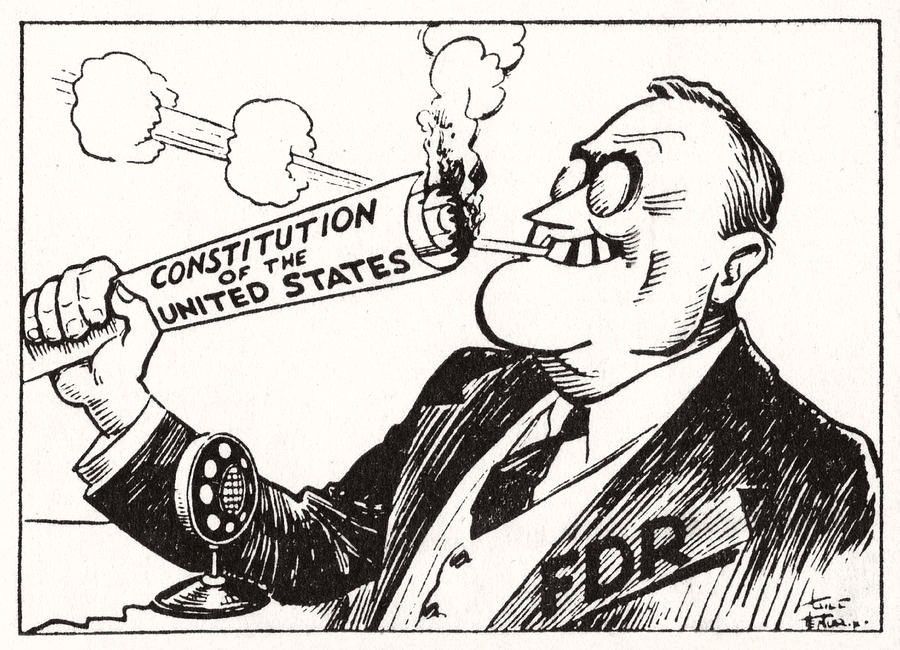
Courtesy of Library of Congress
In addition, critics believed Congress lacked the constitutional authority to impose payroll taxes for Social Security, viewing the program as an overreach of federal power and a dangerous step toward socialism that threatened personal liberty and free enterprise.
"Do not forget this: such an excessive tax on payrolls is beyond question a tax on employment. In prosperous times it slows down the advance of wages and holds back re-employment. In bad times it increases unemployment, and unemployment breaks wage scales. The Republican party rejects any feature of any plan that hinders re-employment. One more sample of the injustice of this law is this: Some workers who come under this new Federal insurance plan are taxed more and get less than workers who come under the State laws already in force."
“I Will Not Promise the Moon” by Alf Landon (1936)
A shareholder of the Edison Electric Company later sued to prevent the company from paying and collecting Social Security payroll taxes, arguing that the Social Security Act exceeded Congress’s constitutional authority. The Court upheld the Act, broadly interpreting the “general welfare” clause to allow Congress to address national economic insecurity, including elderly poverty. This ruling confirmed Social Security’s constitutionality and expanded the federal government’s role in economic policymaking, paving the way for future social welfare legislation.
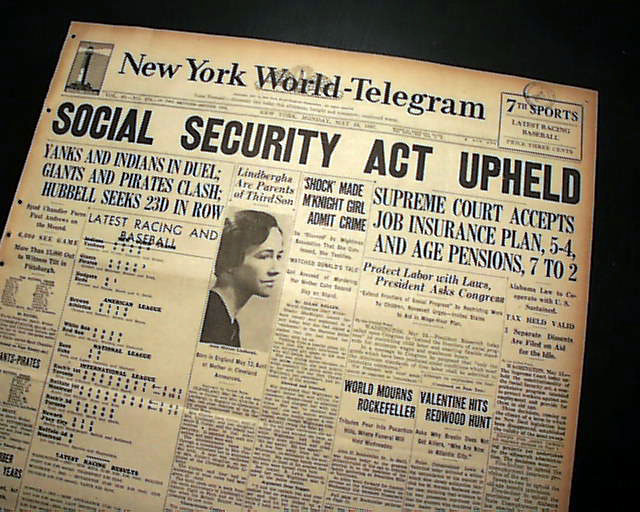
Courtesy of Library of Congress
"Most of us feel that government spending, while necessary during the past few years, has reached a point where it is creating a mountainous debt which future tax-payers will have to shoulder, to their grief. The budget, we believe, should be balanced with all possible dispatch"
Reverend Cooper(1936)