Courtesy of Federal Reserve History
A New Deal for America: How Social Security Redefined Government's Role
The Great Depression, which began in 1929, was a global economic crisis that severely impacted the United States and much of the world. During the 1920s, a booming economy masked underlying problems such as risky stock speculation, easy credit, and overproduction.
Courtesy of Federal Reserve History
Courtesy of Federal Reserve History
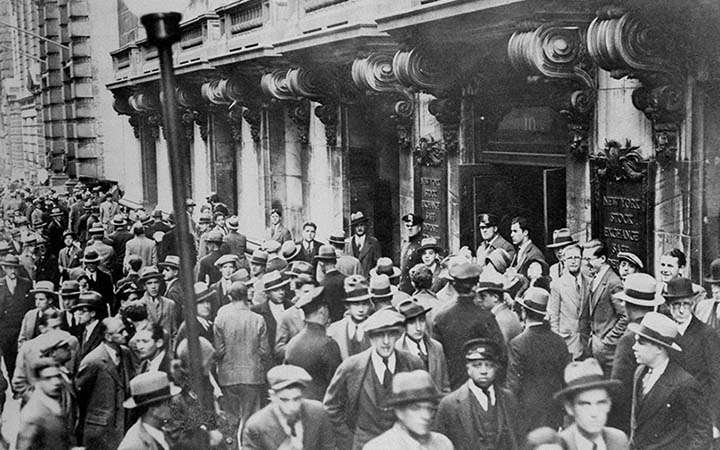
"The market opened in an absolutely free fall and some people couldn’t even get any bids for their shares and it was wild panic. An ugly crowd gathered outside the stock exchange and it was described as making weird and threatening noises. It was, indeed, one of the worst days that had ever been seen down there."
Craig Michell, New York Banker
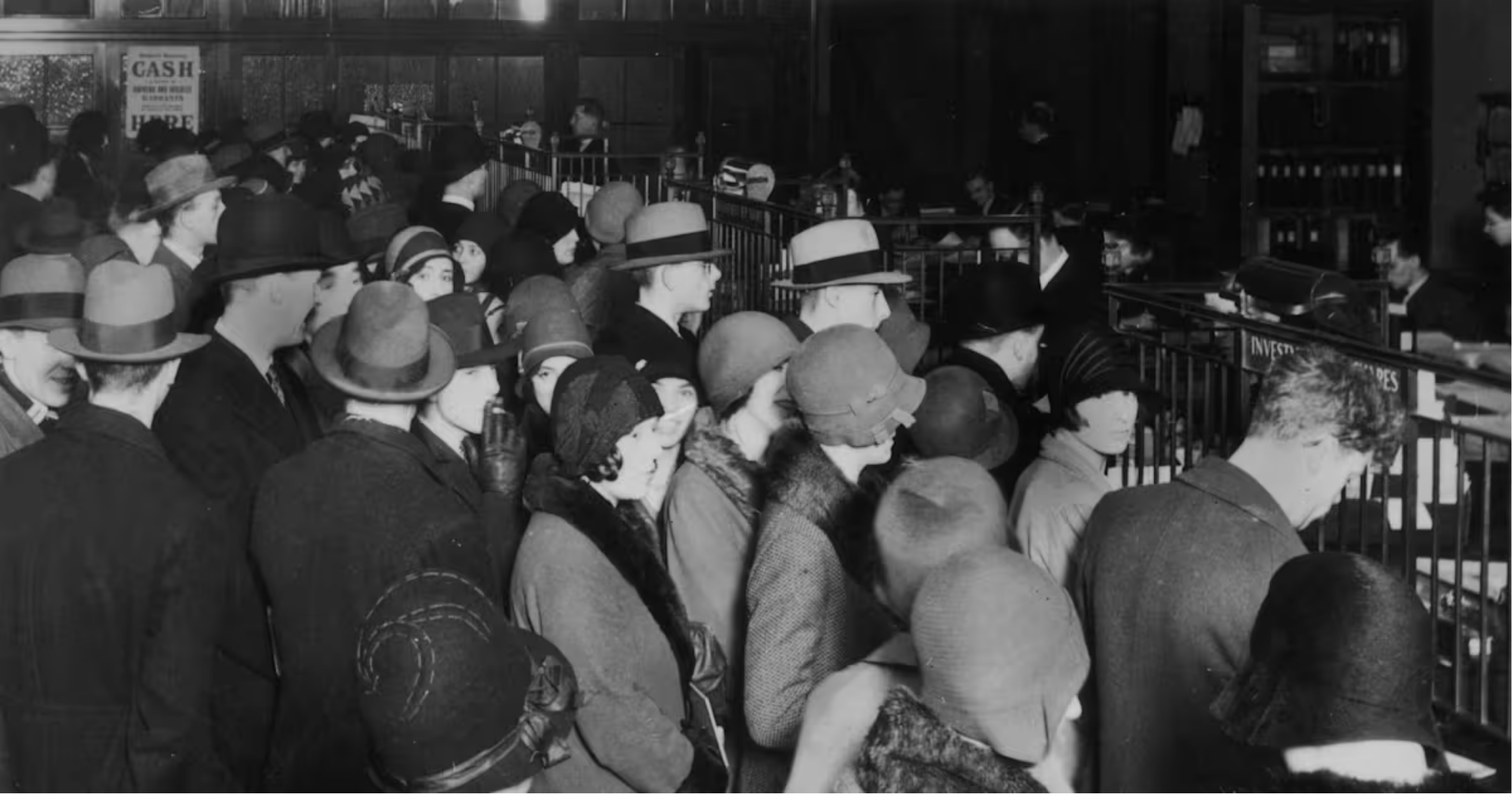
These issues contributed to an uneven distribution of wealth, leaving many Americans unable to afford the growing supply of goods. Farmers and small banks were already struggling after World War I because of falling agricultural prices and unpaid debts. Small banks that had loaned money to farmers began to fail, contributing to the economic collapse on Black Tuesday, October 29, 1929. This event marked the beginning of the Great Depression, a period of hardship and uncertainty that transformed the American economy and society.
Courtesy of Federal Reserve History
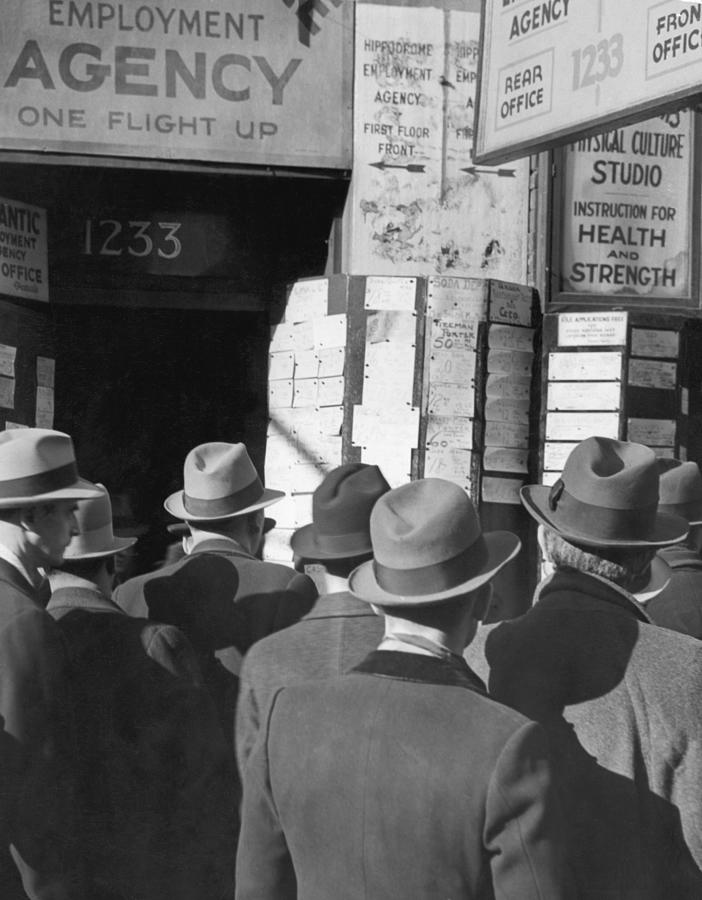
"Lost my job at Ford after 12 years. Wife sold her wedding ring for $2 groceries. We're in a Hooverville shack by the tracks—cardboard walls, no heat. Kids cry for milk we can't buy. Government relief? A 25-lb sack of flour if you wait 3 days."
James Taylor(Chicago factory worker, 1931
Courtesy of Franklin D. Roosevelt Library
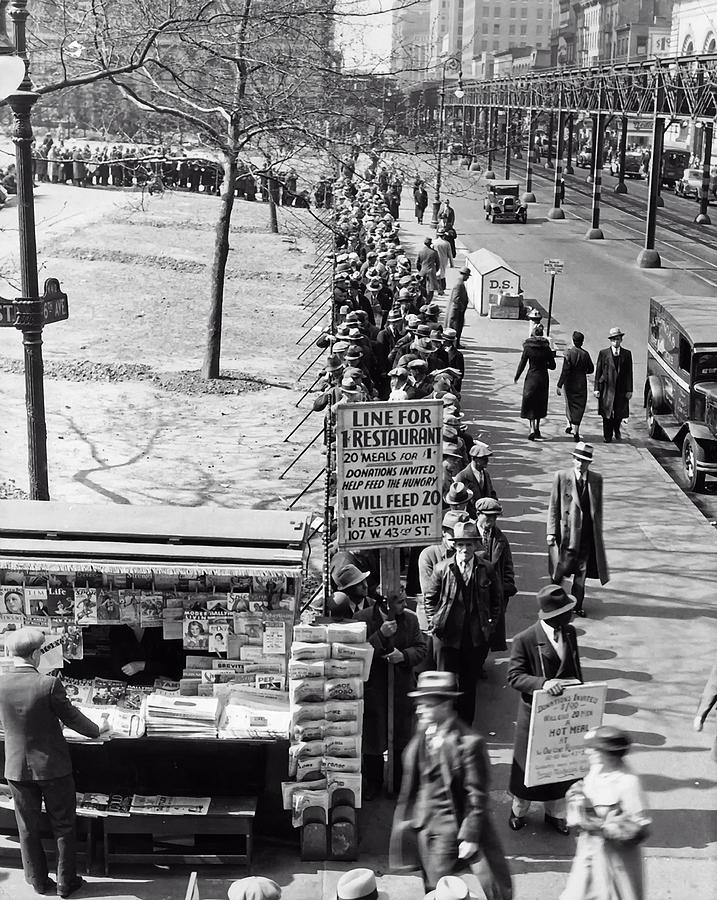
"How can you frighten a man whose hunger is not only in his own cramped stomach but in the wretched bellies of his children? You can't scare him--he has known a fear beyond any other"
The Grapes of Wrath by John Steinbeck
Hoover Deepening The Crisis
At the beginning of the Great Depression, President Herbert Hoover believed the downturn was a normal part of the economic cycle and largely maintained a hands-off approach. He attempted to address the crisis by cutting taxes, encouraging businesses to maintain wages and jobs, and relying on private charities.
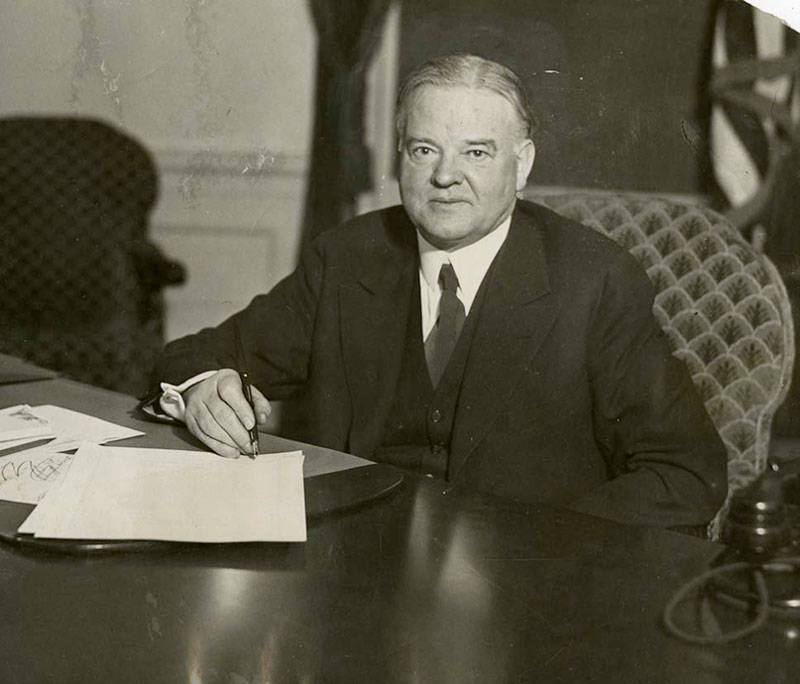
Courtesy of National Archives
"Econcmic depression cannot be cured by legislative action or pronouncement. Economic wounds must be healed by the action of the cells of the economic body - the producers and consumers themselves"
President Herbert Hoover's message to Congress, 1930
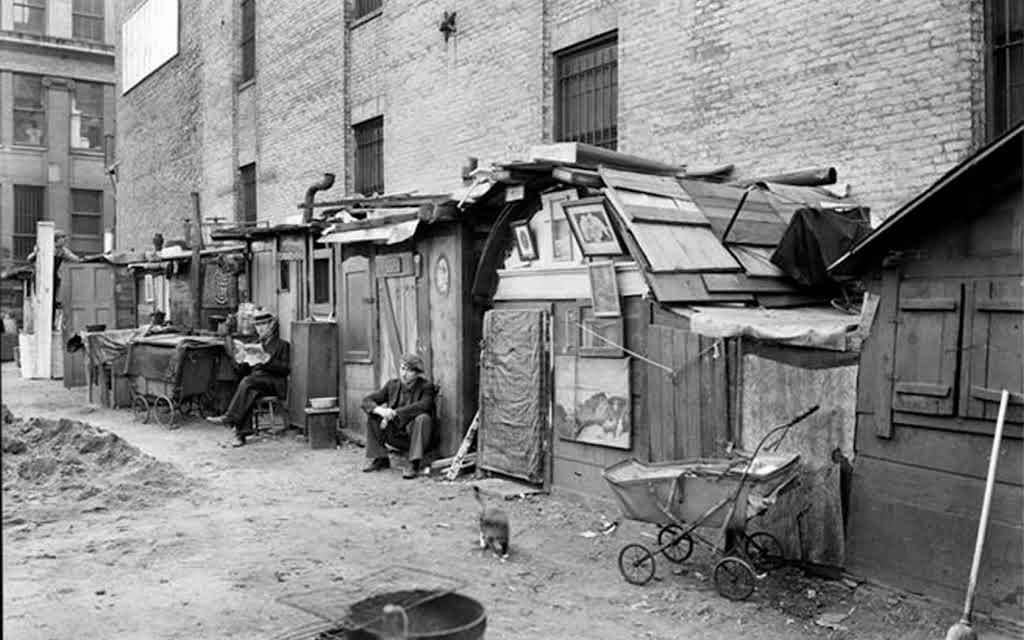
"Hoovervilles", Courtesy of Library of Congress
By 1933, millions of Americans were living in poverty and desperation. Hoover’s limited response fueled public resentment, reflected in the shantytowns known as “Hoovervilles,” newspapers referring to blankets as “Hoover blankets,” and unemployed citizens turning their empty pockets inside out, known as “Hoover flags.”
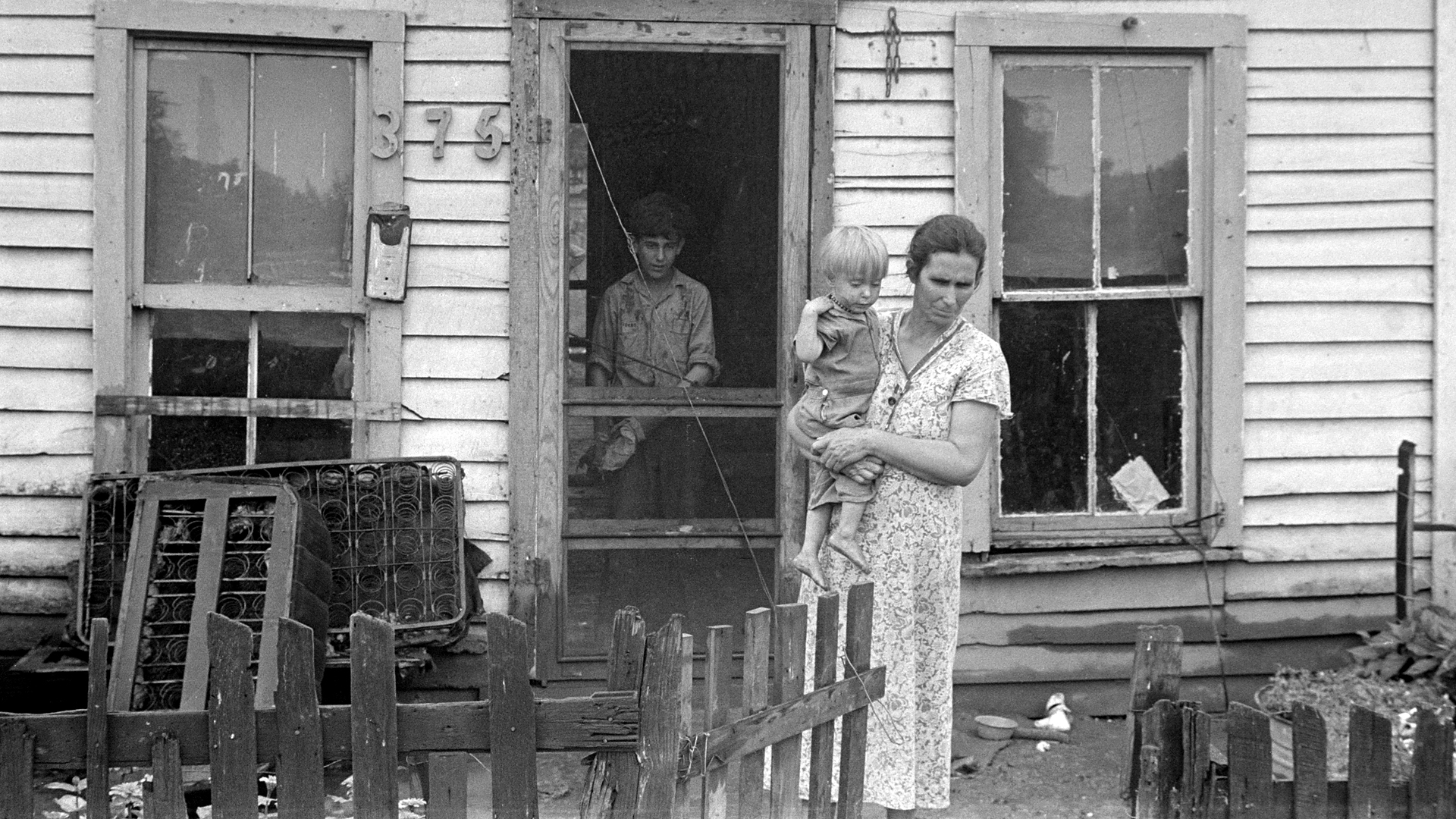
"Hoovervilles", Courtesy of Library of Congress
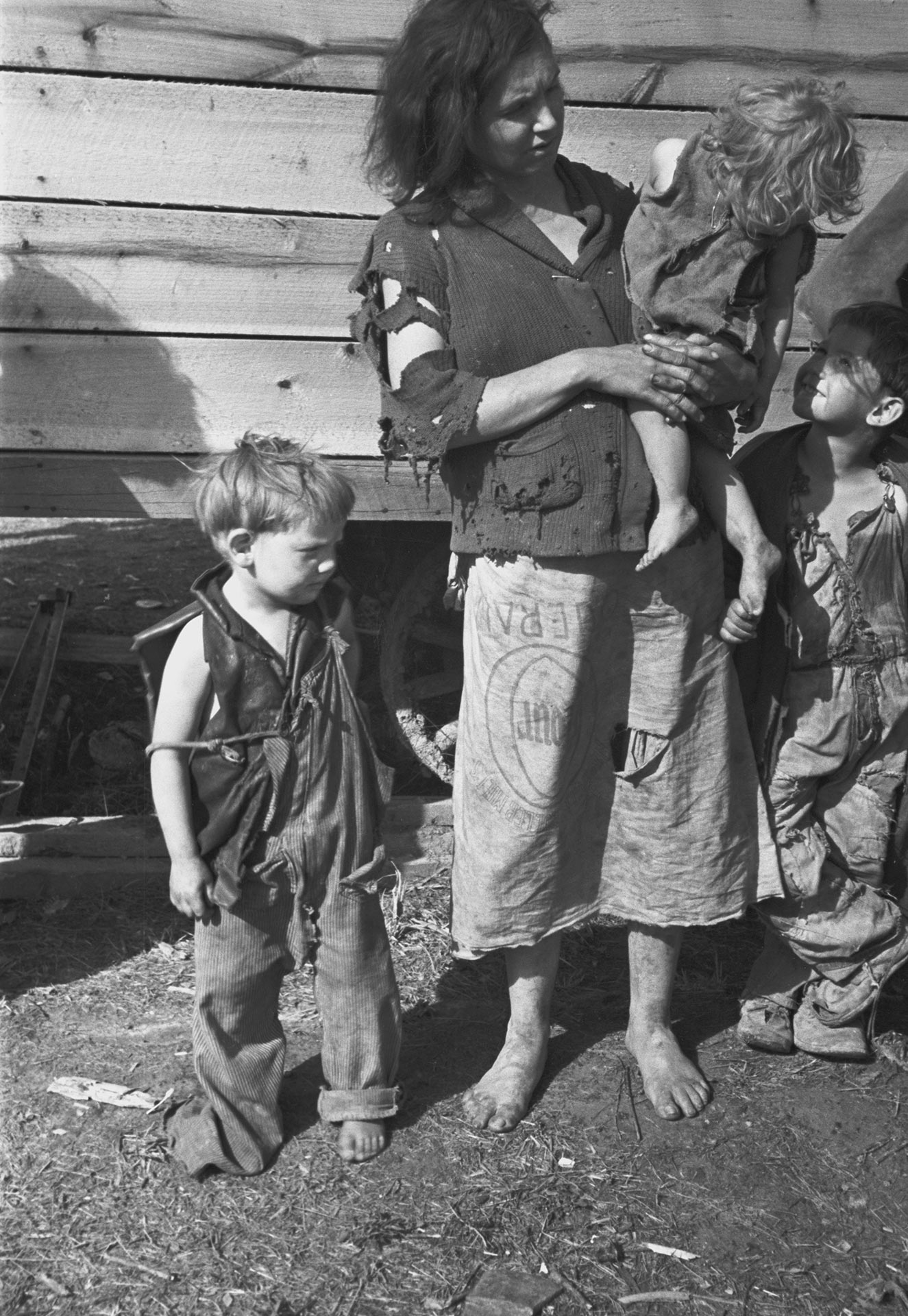
Photograh by Carl Mydans for the U.S. Resettlement Administration - Courtesy of American History
Public frustration over Hoover’s refusal to take stronger action contributed to his defeat in the 1932 presidential election against Franklin D. Roosevelt, who campaigned on expanding government intervention through the New Deal.
Insert your text here