One day a woman gave Shriver a call. That first call Shriver received triggered a movement that would change the lives of people with intellectual disabilities.
 Research
Special Stakes
"Part of what Special Olympics is trying to do is break down stereotypes that still exist for people. There is still a lot of fear."
~Maria Shriver, Daughter of Eunice Kennedy Shriver
Camp Shriver
"Back in 1960, a woman from Bethesda, Md. called up Eunice and told her that she was having trouble finding a summer camp for her child with intellectual disability. The child wouldn't be accepted into a mainstream camp, and, at that time, the public education system couldn't figure out what to do with special-needs children never mind supply them with summer activities. Then another woman told her almost the same thing."
~Courtesy of The Eunice Kennedy Shriver Organization
Upon hearing this news, Eunice decided that intellectually disabled children should have the same opportunities as abled children. Then, with open arms, Eunice welcomed disabled children into her backyard where she then started Camp Shriver.
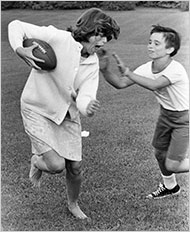
Eunice Kennedy Shriver playing football with an intellectually disabled child.
Courtesy of John F. Kennedy Hyannis Museum
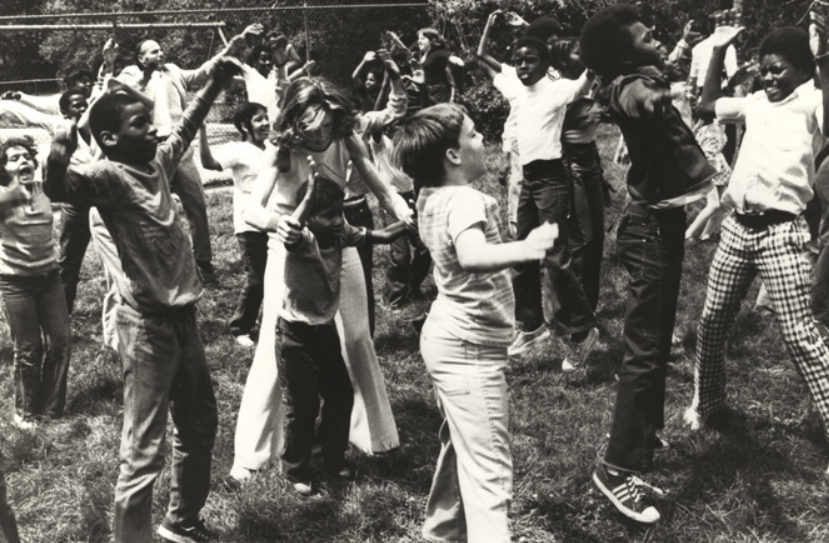
Children doing calisthenics at Camp Shriver.
Courtesy of Eunice Kennedy Shriver Organization
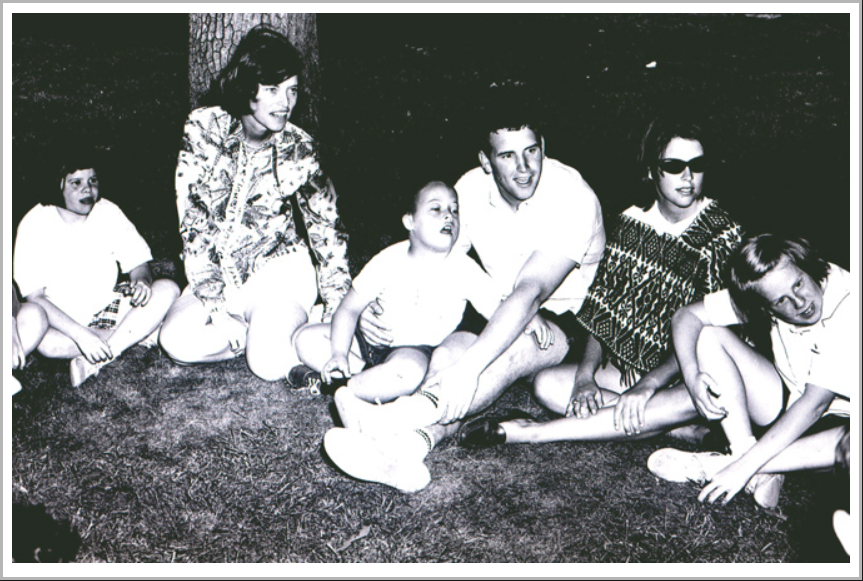
Storytime at Campshriver.
Courtesy of Eunice Kennedy Shriver Organization
“Perhaps most importantly, the young counselors, wary at first, began to see, as Eunice already had, that these children were not ‘difficult,’ ‘unteachable,’ ‘belligerent’ and all those other stereotypes that had been ascribed to them. They merely wanted to have fun...just like every other kid.”
~Courtesy of the Eunice Kennedy Shriver Foundation
Camp Shriver’s message instantly became clear as the counselors quickly noticed that the kids were not at all unteachable.
"It had a huge impact on me. Just to be around it. Just the smiles and the joy it gave me is something I've never felt before...it gives my players a chance to understand about giving back in the community."
~Basketball coach Mark Turgeon
Eunice Kennedy Shriver had an impact on America in the '60s, through Camp Shriver, before her most prominent organization, The Special Olympics.
“Under Eunice Kennedy Shriver's leadership, the Foundation achieved ground-breaking advances. These included the creation of President Kennedy’s Panel on Mental Retardation in 1961, development of the National Institute for Child Health and Human Development in 1962, establishment of a network of university-affiliated facilities and intellectual disabilities research centers at major research universities across the United States in 1967”
~Courtesy of the Special Olympics Organization
“By your presence, you send a message to every village, every city, and every nation.”
~Eunice Kennedy Shriver
“Eunice Kennedy Shriver starts an innovative summer camp for young people with intellectual disabilities at her home in suburban Washington, D.C. The goal is to see if these young people -- most of whom lived in institutions -- could participate in sports and physical activities. This was a revolutionary idea at the time.”
~Courtesy of the Special Olympics Organization
The Special Olympics
After the growing success of Camp Shriver, Eunice expanded her operation with the help of her friend Anne Burke.
Courtesy of WeAreOneChicago
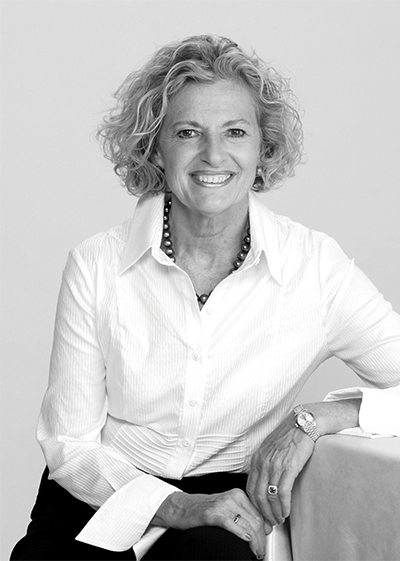
Anne Burke
Courtesy of Better
After the Chicago Park District asked the Kennedy Foundation to help host a city track meet in the fall of 1967, Eunice Kennedy Shriver and Anne Burke met with Park officials to make an Olympic type game to include people with intellectual disabilities internationally.
“The Chicago Park District begins plans for a citywide track meet modeled after the Olympics. A proposal is made to Eunice Kennedy Shriver and the Kennedy Foundation. Shriver embraces the project and asks Anne McGlone Burke to enlarge the scope to include athletes from around the country.”
~Courtesy of Special Olympics Organization
A year after the proposal, the first Special Olympics games were held on July 20th, 1968 at Soldier Field, Chicago. Over 1,000 contestants showed up, competing in the sports they love.
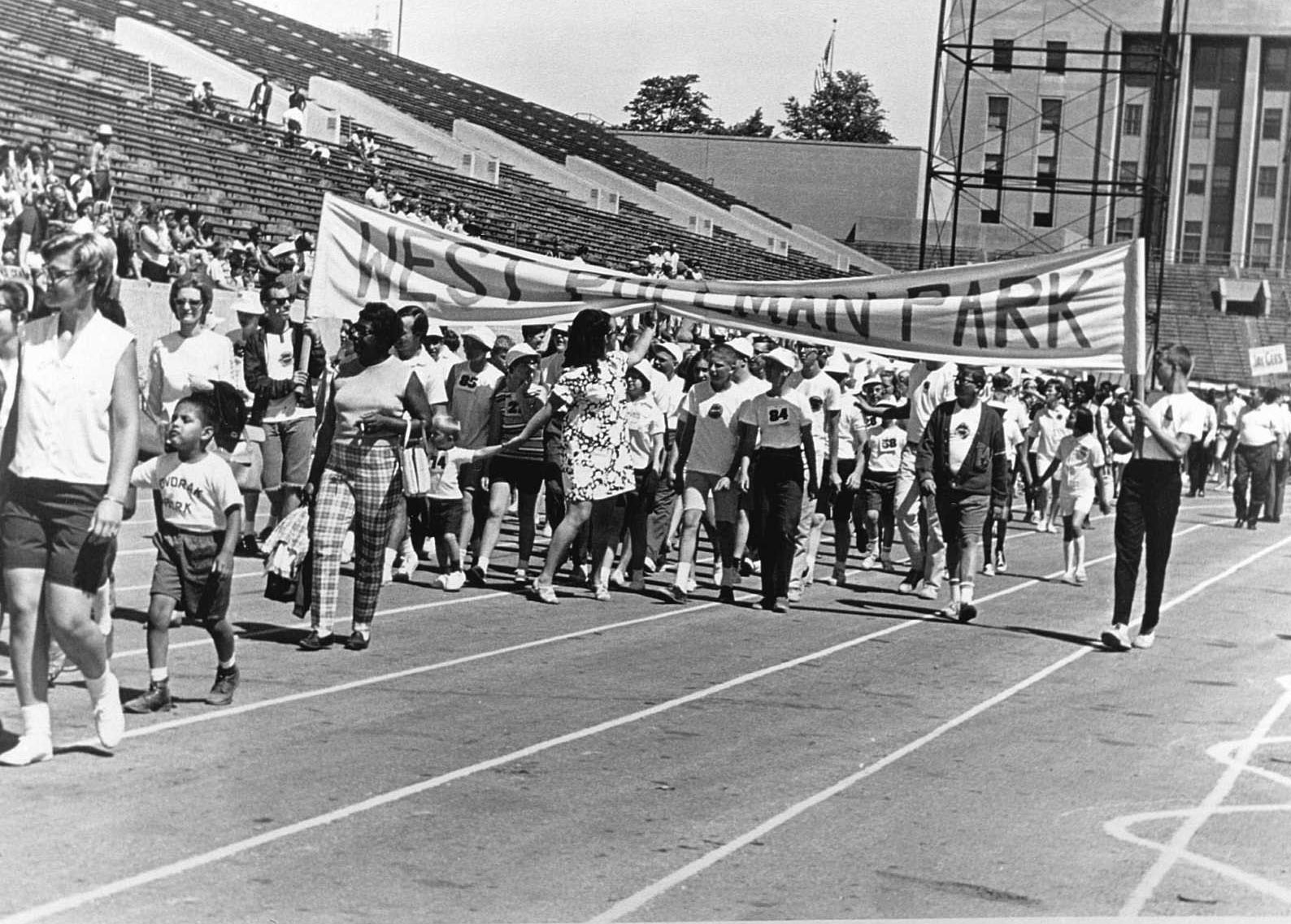
Chicago Park District Track Meet.
Courtesy of Soill.org
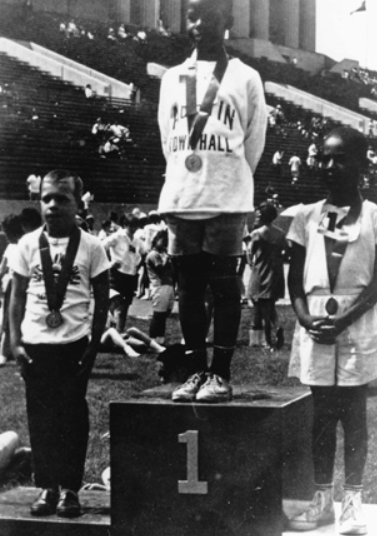
Photo showing the first time the intellectually disabled have been recognized for their athletic abilities.
Courtesy of Eunice Kennedy Organization
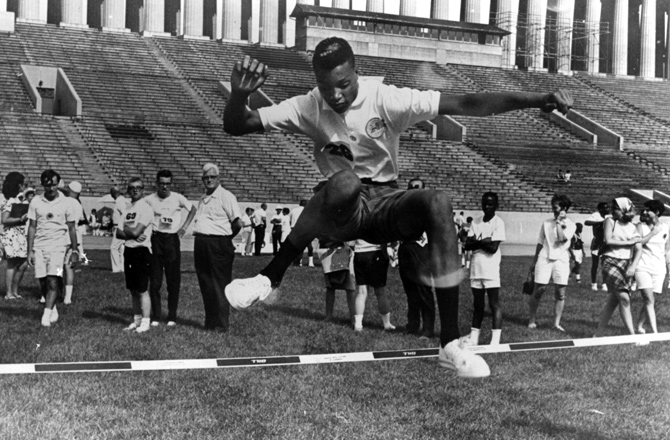
Special Olympics athlete demonstrating his athletic skills, 1968.
Courtesy of Eunice Kennedy Shriver Organization
In the 60’s when the Special Olympics was started, America was still heavily segregated. The Special Olympics had a very diverse group of athletes, even including African American children. This shows that the Special Olympics focused on who you were instead of your disability or race, promoting even more inclusion in America.
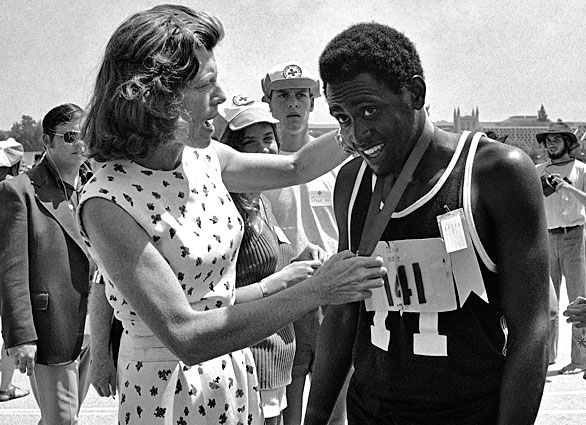
Eunice awarding African American Athlete.
Courtesy of NickPics
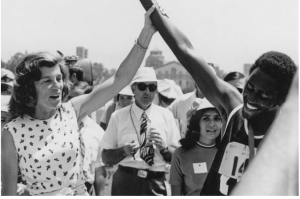
Eunice congratulating an African America athlete.
Courtesy of NickPics
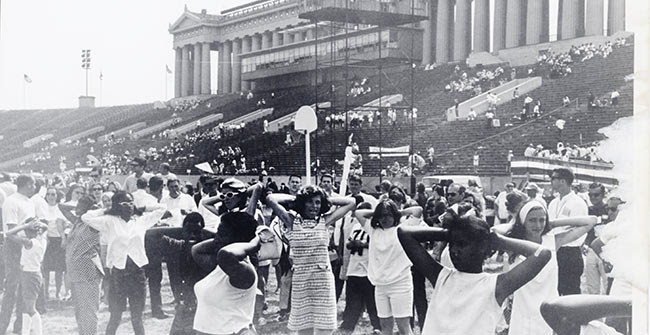
Eunice preforming warmups with athletes during the first Special Olympics, 1968.
Courtesy of Special Olympcis Illinois
Shortly after, the Special Olympics was kept alive when U.S Senator Edward Kennedy held a meeting to create Special Olympics Inc. Funds also help keep this biennial operating.
“The first Special Olympics Games were held at Soldier Field in Chicago in 1968. And since 1968, the Knights of Columbus has raised and donated more than $600 million to programs for individuals with intellectual and physical disabilities; with Special Olympics being one of the larger programs the Order donates to.”
~Steve Cerve, Special Olympics Chairman