HomeThesisBackgroundImpactInfluenceImportanceTimelineProcess Paper and Annotated Bibliography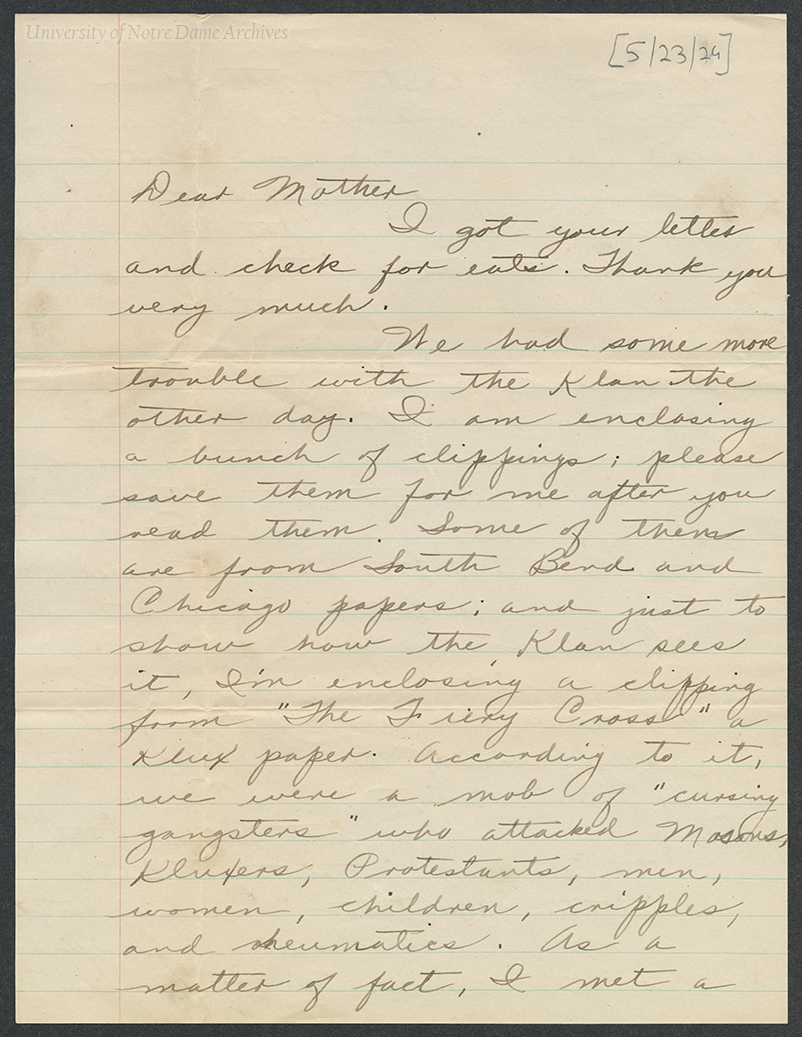
Background
A letter from a student to his mother after the riot. It says the students "had a lot of fun".
(Brieg 1)
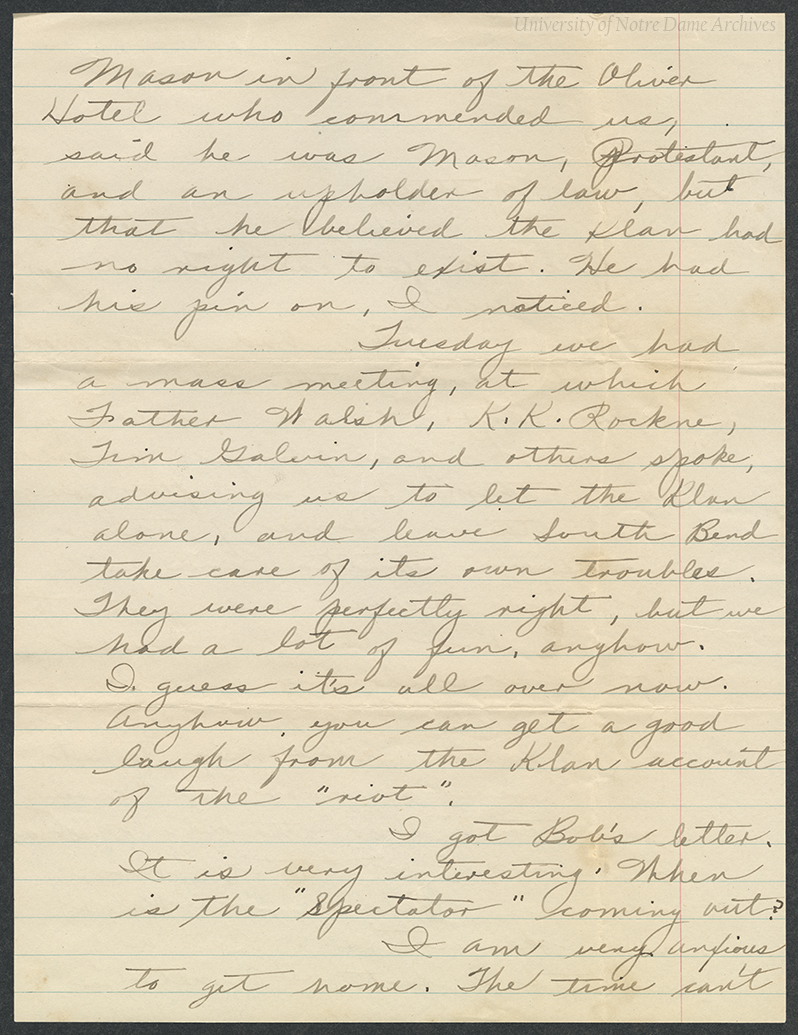
A letter from a student to his mother after the riot. It says the students "had a lot of fun".
(Brieg 2)
The Ku Klux Klan first began after the Civil War. By the early 1900s, it had mostly died out, but the Klan rebirthed in 1915, partially thanks to a movie that depicts it as a supporter of order and justice (Tucker 53). Indiana membership skyrocketed, giving Indiana the largest membership of any state in the country (Tucker 59). The Klan opposed immigrants, especially Catholic ones, and thus they were shown as a supporter of Americanism. Also, the Klan supported Prohibition, seen as a law against immigrants who consumed alcohol. By 1924, the students of Notre Dame were disgusted by the lies and rumors that the Klan was spreading about Catholicism. The students and citizens from the Polish Falcons Club even collected potatoes to prepare for a possible riot (Burns 304). A revolution was just around the corner. On May 17, 1924, the students proved that the Klan did not belong in South Bend. By driving the Klan from the city, the students were having a revolution against the Ku Klux Klan.