The Decembrists
Revolution
Reaction
Reform
Annotated Bibliography
Who Were The Decembrists?
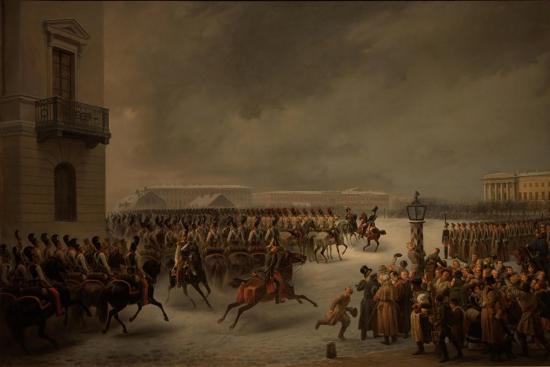
Portrait of the Decembrist Revolt at Senate Square
(Vasily)
"The Decembrists, divided into the Northern and Southern Societies, aimed to challenge the legitimacy of the new Czar Nicholas I, whom they viewed as a usurper. Unfortunately, the poorly organized rebellion faced overwhelming military opposition, leading to its swift failure. The aftermath saw severe repercussions for the Decembrists, with many leaders executed or exiled to Siberia."
(McGrew)
The Ideas of the Decembrists came from the exposure of Western forms of rule that were different from the Russian autocracy. The exposure can be seen from Peter the Great's trip to England from 1697 to 1698. During the Napoleonic wars specifically, members of the Russian military first handedly expierienced these different ideas. As they returned, they began to introduce these ideas via secret societies. The development of these secret societies was dangerous, but ultimately brought people together before the revolt. The revolt is seen as a revolution throughout history, as it resembled the determination of the people against the Russian autocracy, as well as influencing many revolutions down the line. The reaction that the government had towards the people was aggressive and cruel. Although the revolt was unsuccessful and caused very little reform in the autocracy, it had a large significance in 19th century Russian history.